Sleep Tracking for Shift Workers: What Fails
Dovy Paukstys
Founder, Komori Care
7 AM, Coming Home With the Sun
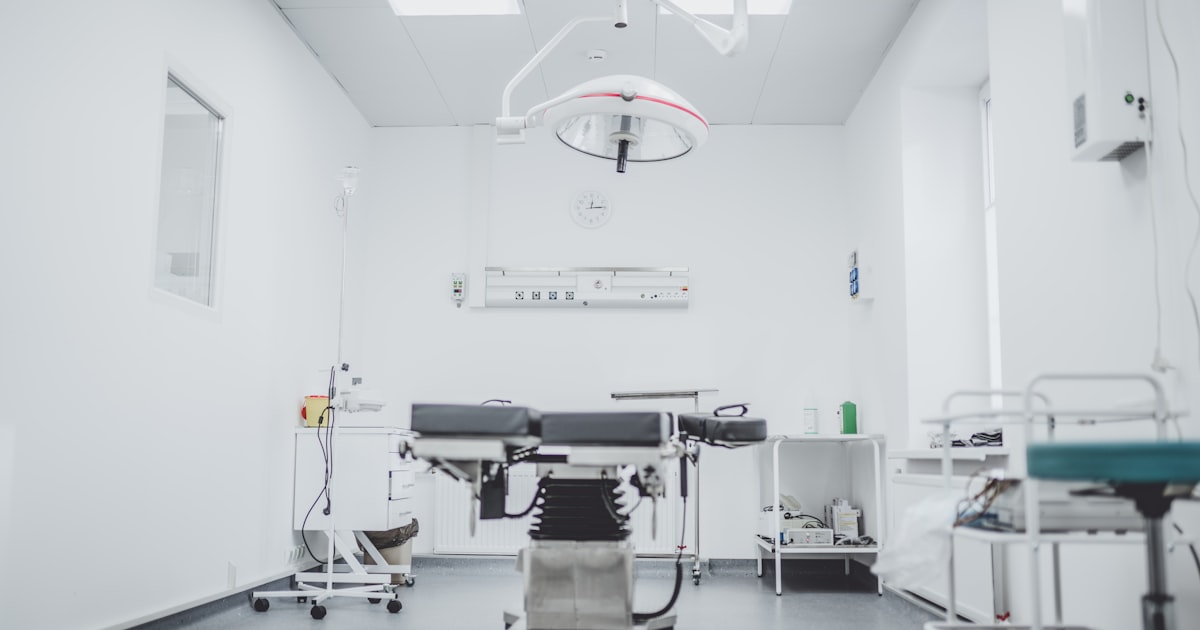
A nurse finishes a 12-hour overnight at the trauma unit. She walks out at 7:15 AM into bright July sun, is home by 7:45, blacks out the bedroom, and is asleep by 8:10. She wakes at 3 PM and her tracker tells her she had 7 hours of sleep, but "very poor quality." It penalizes her HRV, flags the day as a recovery risk, and suggests she "go to bed earlier tonight."
She has another 12-hour shift starting at 7 PM.
The tracker isn't broken. It just wasn't built for her. It was built for somebody who sleeps from 11 PM to 7 AM and has a flat work schedule. Roughly 1 in 6 American workers don't live like that, and they're the ones whose sleep matters most. Nurses, paramedics, truck drivers, ER physicians, factory workers, transit operators. The consumer sleep industry mostly pretends they don't exist.
Let's talk about why that's a problem, what the research actually says, and what good tracking should look like.
Key facts
- About 16% of US workers usually work a non-daytime schedule, including roughly 6% on evenings and 4% on nights, per BLS data on job flexibilities and work schedules.[^1]
- In 2019, the IARC reaffirmed night shift work as Group 2A, "probably carcinogenic to humans," based on limited human evidence for breast, prostate, and colorectal cancers plus strong mechanistic data.[^2]
- Shift workers face a 23% higher relative risk of coronary heart disease and elevated risks of type 2 diabetes, stroke, and obesity, per a comprehensive BMJ review.[^3]
- Estimates put the prevalence of Shift Work Disorder at 10–27% of night and rotating workers, depending on diagnostic strictness.[^4]
- In one validation study, consumer wearables missed 3.6% to 37.3% of daytime sleep episodes when sleep happened outside expected nighttime windows.[^5]
- The IARC working group convened in Lyon in June 2019 published its findings as Monographs Volume 124, the global reference for shift work cancer risk.[^6]
Want a follow-up on this topic? Get a note when Komori launches (2027)
One email when the contactless monitor ships, plus the occasional short follow-up on this topic. No spam, leave any time.
The Scale of the Shift-Work Population
This isn't a niche. The US Bureau of Labor Statistics finds that around 16% of full-time workers usually work outside a daytime schedule, with the highest rates in leisure and hospitality (37%), transportation and utilities (26%), and retail (25%).1 In manufacturing, transportation, and healthcare, regular night work climbs into the 5–9% range for specific occupations.2 OECD and European surveys put shift work in the 15–25% band across industrialized countries. Hundreds of millions of people globally sleep outside conventional nighttime hours.
What Misaligned Sleep Does to the Body
Circadian misalignment is a measurable physiological state where your master clock, the suprachiasmatic nucleus, is out of phase with the external light-dark cycle. Charles Czeisler's group at Harvard and Kenneth Wright's lab in Colorado have shown that working against your endogenous rhythm sends your hormones sideways.3 Cortisol gets blunted. Melatonin rises during your shift. Insulin sensitivity drops. Inflammation markers go up. These changes happen within days and often don't reset between shifts.4
Long-term cohorts show the cost. Göran Kecklund and John Axelsson's 2016 BMJ review, drawing on 38 meta-analyses and 24 systematic reviews, found relative risks of 1.23 for coronary heart disease, 1.05 for stroke, 1.09 to 1.40 for type 2 diabetes, and 1.01 to 1.32 for various cancers in shift workers vs. day workers.5
The Nurses' Health Study II is the workhorse cohort. Céline Vetter and colleagues found that each five-year increment of rotating night shift work was associated with roughly a 31% higher hazard of type 2 diabetes, with risk amplified by poor lifestyle factors.6 The same cohort links night shift to weight gain, cardiovascular disease, and certain cancers.
That's the backdrop the IARC responded to in Lyon in 2019. The working group reaffirmed its 2007 verdict and classified night shift work as Group 2A, probably carcinogenic to humans, citing consistent human evidence for breast, prostate, and colorectal cancer and strong mechanistic evidence on circadian disruption and melatonin suppression.7 8
Diane Boivin's lab in Montreal has shown how the central pacemaker resists realignment, because workers get morning daylight on the commute home, social cues during the day, and inconsistent sleep timing on days off.9 Most shift workers never fully adapt.
Clinical recognition of all this is Shift Work Disorder (SWD), defined by ICSD-3 as insomnia or excessive sleepiness plus reduced total sleep time, lasting at least three months and tied to a recurring schedule that overlaps the usual sleep window.10 The AASM clinical practice guideline (Auger et al., 2015) covers circadian rhythm sleep-wake disorders, with timed melatonin and light therapy as the highest-evidence interventions.11
If you've worked nights for years and have chronic insomnia, daytime sleepiness, or dread the start of your sleep period, talk to a sleep physician. SWD is real, treatable, and underdiagnosed.
Why Standard Trackers Get Shift Workers Wrong
Most consumer sleep trackers were validated on daytime workers sleeping at night. The algorithms have time-of-day priors baked in. They expect a single contiguous sleep period anchored at night, a predictable cortisol-melatonin curve aligned with local clock time, and daytime light during waking hours. When a nurse falls asleep at 8 AM, the assumptions break in three ways.
1. The window assumption. Many devices treat anything outside the user's "typical" window as a "nap." Naps get dropped from headline stats. A 7-hour daytime sleep can land in the same bucket as a 25-minute couch nap. A multi-device validation found consumer trackers missed 3.6% of daytime sleep episodes for the best device, climbing to 37.3% for the worst.12
2. The light and melatonin assumption. Sleep stage classifiers use HRV and movement patterns that are themselves modulated by circadian phase. Sleep with an off-clock melatonin profile and your HRV signature looks weird. Trackers interpret weird as "low quality." A 2024 head-to-head study of Oura, Apple Watch, and Fitbit against polysomnography reported sleep stage sensitivities of roughly 50% to 86%, all in healthy adults sleeping 8 hours at night.13
3. The score and recovery framing. Oura readiness, WHOOP recovery, and Fitbit sleep score combine timing with circadian-derived signals. If the tracker thinks you "should" be sleeping at midnight and you're working a code, your "readiness" tanks regardless of how you actually slept. The scores tell shift workers they're broken every day.
A multicenter validation of 11 consumer trackers found macro F1 scores from 0.26 to 0.69 for sleep stage classification.14 None of these were validated on rotating-shift populations. If your tracker thinks 11 PM to 7 AM is the right answer and you live a 7 PM to 7 AM working life, the device is wrong about you, not the other way around.
What Good Shift-Worker Sleep Tracking Should Do
The fix isn't subtle. It's a different design philosophy.
Be time-of-day agnostic. Sleep is sleep. It doesn't matter if it starts at 11 PM, 8 AM, or 4 PM. Report duration, position, movement, and breathing without smuggling in clock-time judgments.
Stop scoring quality from circadian phase. A "sleep score" that punishes you for daytime sleep is a circadian opinion dressed up as data. Show the metrics. Let the user interpret.
Accommodate fragmented and split sleep. Many shift workers do "anchor sleep" plus a nap. Tracking should treat both segments as real and not collapse them into a single "main" period.
Track environment regardless of time. Bedroom temperature, ambient noise, light leakage at noon, and CO2 buildup matter just as much for daytime sleep, and arguably more (you're fighting the world).
Surface position and movement, not opaque scores. Movement frequency, position transitions, and breathing irregularity are objective and useful. Consumer-level sleep stage labels are mostly guesses with confidence intervals nobody shows you.
We've written before about why we don't show a sleep score, and shift workers are exhibit A for why.
Practical Steps That Actually Help
AASM guidance, Czeisler-lab research, and field studies converge on a small set of practices that actually move the needle.
Anchor sleep. Pick a sleep block you can hit on both work days and recovery days. Even on days off, try to keep at least a 4-hour overlap with your usual window. Total schedule swaps on weekends destroy what little adaptation you've built. We covered the math in our weekend sleep debt post.
Black out the bedroom hard. Daylight is the strongest reset signal your suprachiasmatic nucleus has. Blackout curtains, an eye mask, and a room that truly simulates night are non-optional. The AASM circadian guideline calls out timed light avoidance as a treatment-grade intervention.11
Use timed light strategically. A bright light box at the start of your shift, dark glasses on the morning commute home, and disciplined avoidance of phone light before sleep can shift the master clock by an hour or two on a stable rotation.
Strategic napping. A 20-30 minute nap before a night shift reduces sleepiness on the job. Don't nap after about 4 PM if you have a night shift coming.
Talk to a doctor for chronic symptoms. Months of insomnia, daytime sleepiness, mood changes, or falling asleep driving home aren't "shift work life," they may be Shift Work Disorder. Real treatments exist, with AASM-graded evidence behind them.
For caregivers of shift-working family members, our sleep monitor for parents post covers what to watch for. The caregiving overview walks through how passive monitoring fits in.
How Trackers Stack Up on Daytime Sleep
A rough comparison based on validation literature and published behavior:
| Tracker | Daytime sleep capture | Score penalizes off-hours sleep | Anchor / split sleep | Environment context |
|---|---|---|---|---|
| Apple Watch | Captures naps if user enables; main "Sleep" centered on schedule | Yes, "Sleep Schedule" framing | Limited | None built-in |
| Fitbit | Tracks naps over ~1 hour; can miss shorter daytime sleep | Yes, score weights time-in-bed | Limited | Skin temp only |
| Oura Ring | Better daytime sleep handling than peers; tags as "rest" | Partial, readiness still clock-anchored | Improved nap detection | Skin temp, no room env |
| WHOOP | Detects naps; main sleep favored | Yes, recovery clock-anchored | Limited | None built-in |
| Garmin | Variable; skips many short daytime sleeps | Yes, sleep score similarly weighted | Limited | None built-in |
| Komori radar (pre-launch, design intent) | Time-of-day agnostic, every period equal | No score, neutral metrics | Native split sleep support | Room temp, humidity, sound, CO2 |
Consumer wearables are useful for the population they were validated on. Shift workers need a different kind of tool. Our Apple Watch versus dedicated sleep monitoring post covers the trade-offs.
Sleep When You Sleep
Komori was built around a simple principle. The radar doesn't know what time it is. If you're in bed and breathing and not moving, that's sleep. If you're tossing, that's movement. If you leave the bed, that's a bed exit. Time of day is not an input to whether your body counts as sleeping.
The 60GHz radar is designed to run locally — no camera, no wearable. On-device microphones classify sound events locally; only audio features are recorded, and raw audio is not kept anywhere unless you explicitly ask for it. It will log position, movement, and bed-exit events (respiratory metrics are a Pro-sensor-suite capability, not a Lite feature). Pair it with the room-environment sensors and you get an honest record of your sleep, whatever clock face it lands on. Komori is a wellness product, not a medical device. We don't diagnose Shift Work Disorder. We give you data that doesn't lie about when sleep is happening.
See how Komori works on the sleep page, or read about the hardware design choices that make this possible. Shift workers keep the lights on, the trucks moving, the ERs staffed. The least the tools they use should do is treat their sleep as real.
Keep reading
- Sleep tracker for shift workers — CircaFlow, ShiftNight, Oura Ring 4, and contactless mats.
Footnotes
-
US Bureau of Labor Statistics, "Job Flexibilities and Work Schedules Summary," and "Workers by shift usually worked and selected characteristics," BLS news releases, https://www.bls.gov/news.release/flex2.t07.htm and https://www.bls.gov/news.release/flex2.nr0.htm. ↩
-
Chen GX et al., "Working Hours, Shift, and Remote Work by Industry and Occupation in U.S. Full-time Workers," Workplace Health & Safety, 2024. https://journals.sagepub.com/doi/10.1177/21650799241257157. ↩
-
Wright KP, Bogan RK, Wyatt JK. "Shift work and the assessment and management of shift work disorder." Sleep Medicine Reviews; and Czeisler CA et al., laboratory studies on circadian phase shifting and light, summarized in Boivin DB et al., "Disturbance of the Circadian System in Shift Work and Its Health Impact," Journal of Biological Rhythms, 2022. https://pmc.ncbi.nlm.nih.gov/articles/PMC8832572/. ↩
-
Leproult R, Holmbäck U, Van Cauter E. "Circadian misalignment augments markers of insulin resistance and inflammation, independently of sleep loss." Diabetes, 2014; and reviews summarized at PMC, https://pmc.ncbi.nlm.nih.gov/articles/PMC4677771/. ↩
-
Kecklund G, Axelsson J. "Health consequences of shift work and insufficient sleep." BMJ 2016;355:i5210. https://pubmed.ncbi.nlm.nih.gov/27803010/. ↩
-
Vetter C, Dashti HS, Lane JM, et al. "Night shift work, genetic risk, and hypertension." Hypertension; and Vetter C et al., "Rotating night shift work and adherence to unhealthy lifestyle in predicting risk of type 2 diabetes," BMJ 2018. https://pubmed.ncbi.nlm.nih.gov/30464025/. ↩
-
International Agency for Research on Cancer, Working Group on the Identification of Carcinogenic Hazards to Humans, "Night Shift Work," Volume 124, IARC Monographs, 2019/2020, https://publications.iarc.who.int/Book-And-Report-Series/Iarc-Monographs-On-The-Identification-Of-Carcinogenic-Hazards-To-Humans/Night-Shift-Work-2020. ↩
-
IARC, "IARC Monographs Volume 124: Night Shift Work," and accompanying Q&A, June 2019, https://www.iarc.who.int/wp-content/uploads/2019/07/QA_Monographs_Volume124.pdf. ↩
-
Boivin DB, Boudreau P, Kosmadopoulos A. "Disturbance of the Circadian System in Shift Work and Its Health Impact." Journal of Biological Rhythms 2022. https://journals.sagepub.com/doi/10.1177/07487304211064218. ↩
-
American Academy of Sleep Medicine, International Classification of Sleep Disorders, Third Edition (ICSD-3) and ICSD-3-TR supplemental materials, https://aasm.org/wp-content/uploads/2023/05/ICSD-3-Text-Revision-Supplemental-Material.pdf; see also Wickwire et al., "Shift Work and Shift Work Sleep Disorder: Clinical and Organizational Perspectives," CHEST 2017. ↩
-
Auger RR, Burgess HJ, Emens JS, Deriy LV, Thomas SM, Sharkey KM. "Clinical Practice Guideline for the Treatment of Intrinsic Circadian Rhythm Sleep-Wake Disorders." Journal of Clinical Sleep Medicine 2015;11(10):1199-1236. https://aasm.org/resources/clinicalguidelines/crswd-intrinsic.pdf. ↩ ↩2
-
Chinoy ED, Cuellar JA, Jameson JT, Markwald RR. "Daytime Sleep-Tracking Performance of Four Commercial Wearable Devices During Unrestricted Home Sleep." Nature and Science of Sleep, 2022. https://pmc.ncbi.nlm.nih.gov/articles/PMC10075216/. ↩
-
Chee NIYN et al., "Accuracy of Three Commercial Wearable Devices for Sleep Tracking in Healthy Adults." Sensors 2024;24(20):6532. https://www.mdpi.com/1424-8220/24/20/6532. ↩
-
Lee HA, Lee HJ, Moon JH, et al. "Accuracy of 11 Wearable, Nearable, and Airable Consumer Sleep Trackers: Prospective Multicenter Validation Study." JMIR mHealth and uHealth 2023. https://mhealth.jmir.org/2023/1/e50983. ↩
Want a follow-up on this topic? Get a note when Komori launches (2027)
One email when the contactless monitor ships, plus the occasional short follow-up on this topic. No spam, leave any time.
Keep reading
Want to see your sleep position data?
Join the free waitlist for launch updates. Or lock in founder pricing with the Insider Pass ($49, credited toward your purchase).