
◆ Educational Resource
Nighttime Caregiving: What Ambient Data Can (and Can't) Tell You
Important: Komori is not a medical alert system, not a fall-detection device, and not a substitute for medical alert pendants, in-person caregiving, or emergency response. Families managing fall risk, dementia, or wandering should use a dedicated medical alert system. Komori is designed to record bed-exit awareness as ambient wellness context for personal review — not safety-critical monitoring.
Caring for an aging family member raises a recurring question: "what happened last night?" This page is an educational overview of how families think about that question, what the existing tool categories (medical alert pendants, cameras, motion sensors, contactless radar) actually do, and where ambient sleep data fits as background context — not as a safety system.
Komori is a general wellness device in development. It is not FDA-cleared and is not intended to diagnose, treat, prevent, or cure any condition. Komori is designed for households where everyone living in the home consents to having ambient sleep data captured. For clinical concerns about fall risk, dementia, or nighttime safety, please consult a qualified healthcare provider.
Bed-Exit Awareness (Wellness)
General Wellness Device
Consent-Based, Ambient Only
Private by Design
How It Works
How Komori Works
01
Sleep Comfortably
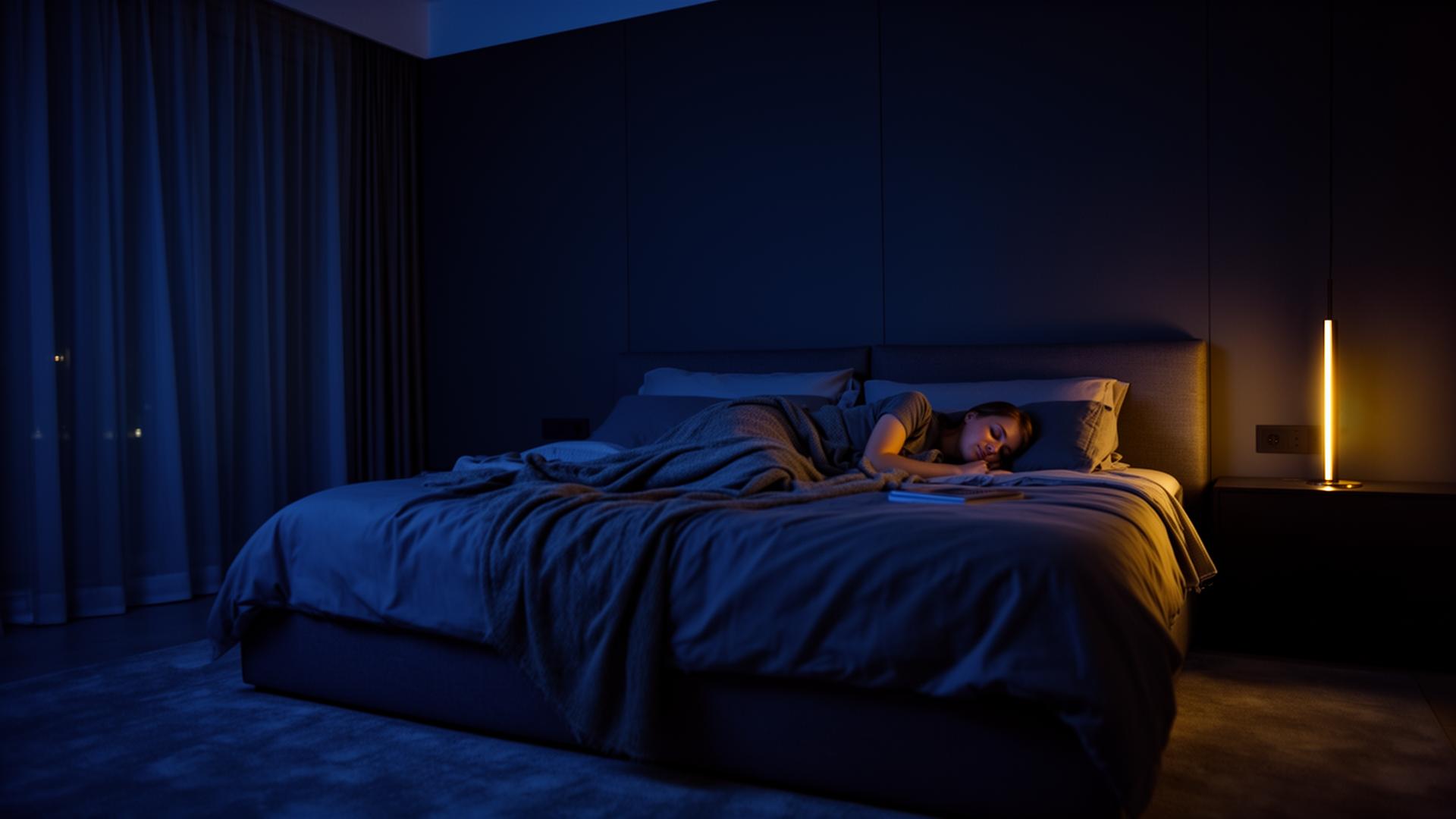
No wearables to remember and no cameras pointed at the bed. The contactless sensor is designed to work through blankets above the bed.
02
Record Position & Movement
Komori is designed to record body position, movement patterns, and bedroom environment (ambient temperature, humidity) overnight. Designed for households where everyone living in the home consents to having ambient sleep data captured.
03
Review Your Own Data
Komori is designed so you can export your own data and, if you choose, share it with your healthcare provider. Komori is not a medical device and does not diagnose, treat, or prevent any condition.
Features
What You'll Discover
Bed Presence Awareness
Komori is designed to record bed presence and out-of-bed time as ambient context for personal, morning-after review. Not a real-time medical alert.
Bedroom Environment
Komori is designed to record ambient temperature and humidity trends in the bedroom for personal review.
Movement Awareness
Komori is designed to track movement awareness through the night. The device does not detect, diagnose, or treat any condition.
Position & Restlessness Patterns
Komori is designed to record body position and restlessness patterns over the course of a night. Personal patterns may be worth discussing with your healthcare provider.
Exportable Personal Data
Komori is designed so you can export your own data and share it with your healthcare provider if you choose to.
Personal Journal
Komori is designed to let you keep an optional journal alongside overnight position and environment data for personal review.
Privacy by Design
No camera, no video. The on-device microphone only records audio features (not raw audio). Raw audio is not kept anywhere unless you explicitly ask for it.
Consent-Based by Design
Designed for households where everyone living in the home consents to having ambient sleep data captured. Komori is not designed to be deployed without the awareness of the person whose bedroom it is in.
Background
A Brief Overview of Nighttime Caregiving
Nighttime caregiving sits at the intersection of safety, dignity, and consent. The information below is educational and is not a substitute for evaluation by a clinician or for a dedicated medical alert system.
What Families Ask
Adult children supporting an aging parent often describe the same recurring question: "what happened last night?" That's a wellness curiosity question — not the same as the emergency question.
Where Medical Alerts Fit
For genuine emergency response — falls, medical events, the inability to get help — families should use a dedicated medical alert system (pendant or smartwatch with fall detection), not an ambient sleep monitor.
Where Ambient Data Fits
Ambient context (bed presence, position, movement patterns) is something families may review the next morning. It is general background information, not a real-time safety net.
For fall risk, dementia, or nighttime safety concerns, speak with a qualified healthcare provider and use a dedicated medical alert system.
Night Review
An Example Night Review
Illustrative only — a mock of how a personal morning-after summary may look.
K
Last Night · Mon Mar 8
9h 04m total · 97% in-bed
Position Breakdown
Back61%
Left Side27%
Right Side12%
Night Timeline
9:48 pmSettled in bed
11:20 pmRestlessness above baseline
1:05 amOut of bed
1:09 amReturned to bed
3:30 amOut of bed
3:35 amReturned to bed
6:52 amOut of bed
2
Out-of-bed times
4
Movement events
6
Position shifts
97%
In-bed time
Komori is designed to surface a personal overview of position, bed presence, and movement patterns from the night for morning-after review. The data is for personal review and, optionally, for sharing with a healthcare provider. Komori is not a medical device, not a medical alert system, and does not diagnose, treat, or prevent any condition.
Tool Categories
How These Tool Categories Compare
These tools answer different questions. Educational overview only — not a recommendation.
Medical Alert Pendants
Designed for emergency response. The right tool when a family member needs to summon help during a fall or medical event. Komori is not a substitute for one of these.
Bedroom Cameras
Provide video confirmation but raise consent and dignity concerns. Many adult family members ask not to be filmed in their bedrooms.
Contactless Radar (Wellness)
Records ambient bed presence and movement context for personal, morning-after review. Designed for households where everyone living in the home consents to having ambient sleep data captured.
Who This Page Is For
Readers this content may help
This is general background reading. It is not personalized medical advice and it is not a recommendation about what to deploy in any specific household.
Curious Readers
Adult family members exploring how others think about nighttime care for aging parents and what the trade-offs look like.
Researchers
Researchers and graduate students studying aging, sleep, and ambient health technologies.
Clinicians
Clinicians curious about contactless approaches to recording overnight body position, bed presence, and movement patterns.
Family Members
Family members supporting a loved one and looking for general background reading on the different categories of nighttime tools.
Why I'm Building This
This is personal.

My twin boys got sepsis in the NICU. One of them was infected three times — the only documented case. All I wanted was to know they were okay.
Those nights changed everything for me. I couldn't stop thinking about how helpless it felt to not know what was happening while someone you love is sleeping. That question — "are they okay right now?" — never really left me. It followed me through 20 years of building data systems, through designing Owlet's data pipeline, through leading technology at SAMi Alert. Every role taught me something, but the question was always the same.
I built Komori for families like mine. Families who lie awake wondering. Families searching for insights that lead to answers. You spend a third of your life asleep. The night has answers. But you can't act on what you can't see.
Komori opens that black box. 60GHz radar that sees through blankets. No camera. No wearable. No video. Just data nobody's been able to give you before.
I designed every system. Every algorithm. This isn't a side project. It's the reason I learned everything I know.
Dovy Paukstys, Founder
Former Senior Solution Architect at Owlet Baby Care · Fractional CTO of SAMi Alert · 20 years in data engineering
Stay in the Loop on Komori
Join the free waitlist for launch updates on Komori — a general wellness device in development.
No spam. Just launch updates, pricing, and product progress. Komori is not a medical device, not a medical alert system, and does not diagnose, treat, or prevent any condition.
From the Blog
Related reading from the Komori Care blog.

FAQ