Women's Sleep Has Been Understudied. It Shows.
Dovy Paukstys
Founder, Komori Care
"You're Just Tired. You Have Kids."
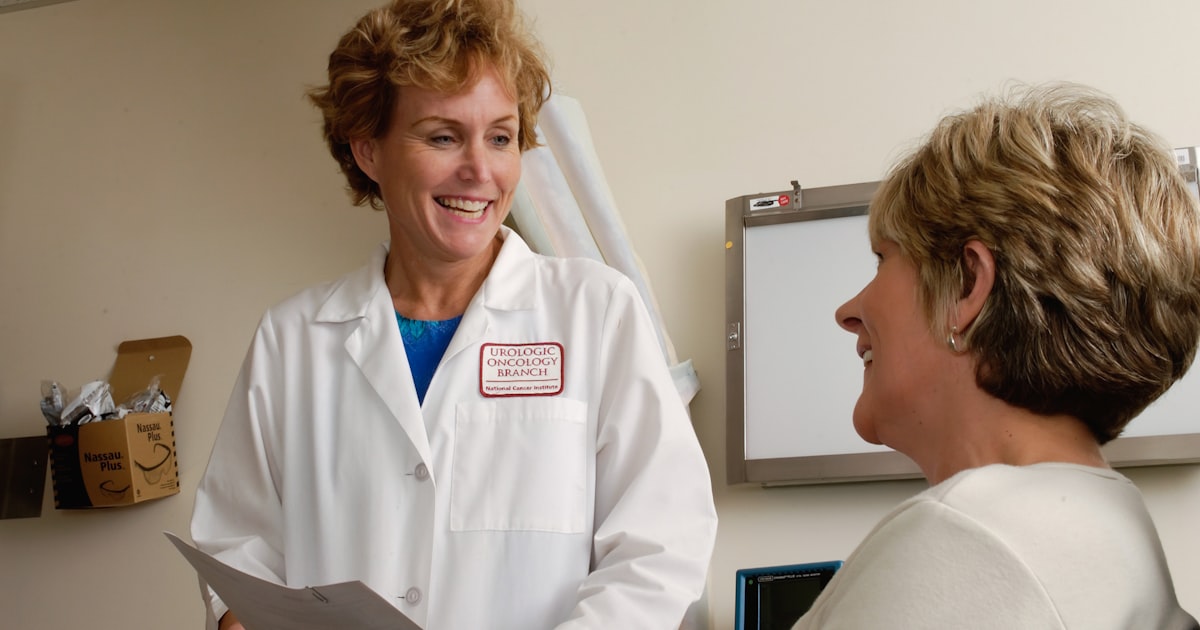
A woman in her forties says she's exhausted, wakes up three or four times a night, and has headaches most mornings. She gets asked about stress. Maybe about mood. She goes home with advice about winding down before bed.
A man the same age says he snores and his wife says he stops breathing. He gets a sleep study.
That's not a story about one bad doctor. It's what happens when the questions, the thresholds, and the tools were mostly built by studying men, and then handed to everybody.
This topic attracts a lot of heat and not much specificity, so here's what the research shows, with numbers, plus where the evidence is still thin. This is educational, not diagnostic. If any of it sounds like your life, the next step is your clinician, not a comment section.
Key Facts
- An estimated 93% of women with moderate-to-severe sleep apnea were undiagnosed, versus 82% of men, in a large workplace cohort (Sleep, 1997)
- Women with sleep-disordered breathing "are often underdiagnosed and undertreated compared to males," partly because symptoms differ (European Respiratory Review, 2019)
- Screening questionnaires perform differently by sex, and researchers conclude gender-specific evaluation is needed to prevent under-diagnosis (Journal of Clinical Medicine, 2020)
- Women carry a 1.41x risk of insomnia compared with men, and the gap widens with age (Sleep, 2006)
- Sleep disturbance affects roughly 16-47% of perimenopausal and 35-60% of postmenopausal women (Journal of Clinical Medicine, 2025)
- In a 40-year review of sleep and chronobiology papers, sex was reported in 89% of studies but only 4% reported age data broken out by sex (Frontiers in Neuroscience, 2024)
Apnea Doesn't Read From the Same Script
The textbook picture of obstructive sleep apnea — loud snoring, witnessed pauses in breathing, falling asleep at the wheel — came from the patients who showed up. For decades those were overwhelmingly men.
A 2019 review lays out how differently the condition presents. Women "appear to be more symptomatic, with lower apnoea-hypopnoea index scores compared to males" — they feel worse at event counts that look mild on paper. They show "more prolonged partial upper airway obstruction," and "may report insomnia as a symptom" more often than men do [^1].
Sit with that last one. A woman whose airway is partly obstructing all night may describe it as insomnia. She's not wrong. But "I can't stay asleep" and "I snore and stop breathing" get routed to very different places in a clinic.
The review's conclusion is direct: females with sleep-disordered breathing "are often underdiagnosed and undertreated compared to males," largely because of how symptoms present. It also shifts with life stage — menopause and pregnancy both change the picture [^1].
The Screening Questions Were Built From a Template
Most people never get a sleep study without first passing through a screening questionnaire asking about snoring, observed apneas, sleepiness, blood pressure, BMI, age, neck size, and sex.
Look at that list. Several items describe the classic middle-aged male patient, and sex itself is scored as a risk factor — being female actively subtracts points.
A 2020 study compared screening questionnaire performance in 350 men and 350 women referred for sleep evaluation. For moderate-to-severe events, the STOP-Bang questionnaire came out at 78.2% sensitivity and 47.3% specificity in men, versus 71.9% sensitivity and 67.3% specificity in women — the specificity difference reached statistical significance [^2].
That's not a catastrophic sensitivity gap, and I won't inflate it. The authors' own conclusion is the takeaway: "gender-specific evaluation of questionnaires is necessary to prevent OSA under-diagnosis." They also flag the consequence — women with sleep apnea "may be misdiagnosed and treated for other diseases, such as depression, insomnia, and hypothyroidism" [^2].
None of these tools were meant to diagnose anything alone. The AASM gives a strong recommendation "that clinical tools, questionnaires and prediction algorithms not be used to diagnose OSA in adults, in the absence of polysomnography or home sleep apnea testing" [^3]. They're triage. When triage is calibrated on one group, the other group waits longer.
The Under-Diagnosis Number
The cleanest evidence on this is old, which is its own kind of statement.
In 1997, researchers used a Wisconsin cohort of 4,925 employed adults, with sleep studies on 1,090 of them, to estimate how much sleep apnea was going unrecognized. Their finding: "93% of women and 82% of men with moderate to severe SAS have not been clinically diagnosed" [^4].
Both numbers are terrible. One is worse — and that was a group with insurance and steady employment, not one facing obvious barriers to care.
Awareness has improved since 1997. The structure behind the gap — different presentation, screening built around a male template — has not fully closed.
Insomnia Runs the Other Direction
Insomnia is more common in women, and that part has been measured well. A meta-analysis pooling studies covering 1,265,015 people found a risk ratio of 1.41 (95% CI 1.28-1.55) for women versus men, "consistent and progressive across age, with more significance in the elderly" [^5].
So women are more likely to have insomnia and more likely to have sleep-disordered breathing described as insomnia. Those two facts interact badly. If the base rate says insomnia is the likely answer, the alternative gets checked less often.
Not every woman with insomnia has apnea. Most don't. But "insomnia" shouldn't end the conversation when there's also snoring, morning headaches, or unrefreshing sleep.
The Cycle Almost Nothing Models
Roughly half the adult population has a monthly hormonal cycle that shifts body temperature, one of the main levers on sleep. Consumer sleep tools have mostly ignored it.
The research is more nuanced than the marketing on either side. A 2023 review found sleep complaints cluster "around the time of menstruation, encompassing the last few premenstrual days (late luteal phase) and first few days of menstrual bleeding" — but with big individual differences. One study it cites split women into three groups: 46% showed no relationship between cycle phase and sleep difficulty, 25% had mid-cycle problems, and 29% had perimenstrual problems 1.
On objective measurements, the changes are real but modest. Most studies find no menstrual cycle variability in sleep continuity in young healthy women. REM sleep starts earlier and runs shorter in the luteal phase, and core body temperature rises about 0.4°C with a blunted overnight decline. The most consistent change is in brain activity: sleep spindle frequency activity is "significantly increased in the luteal compared to the follicular phase" 1.
The honest version: subjective sleep changes a lot for many women, objective sleep changes less than you'd think, and person-to-person variation is enormous. A tool that assumes one universal cycle pattern will be wrong for about half its users.
Menopause and Pregnancy Are Not Edge Cases
Sleep disturbance during the menopause transition is common enough that treating it as a special case is strange.
A 2025 narrative review reports sleep disorder prevalence of 16% to 47% during perimenopause, rising to 35% to 60% in menopause, with 37% of women aged 40 to 55 reporting difficulty sleeping 2. The drivers stack up: hot flashes waking you at night, hormonal shifts, nocturia, night sweats.
The same review names the gap directly — "there is still a lack of standards on the appropriate management and treatment of sleep disorders in perimenopause" 2. That's a lot of people, a well-documented problem, and no settled standard of care. Our menopause and sleep piece goes deeper, and how sleep changes after 50 covers the overlapping age effects.
The Gap Inside the Literature Itself
A 2024 analysis reviewed how sleep and chronobiology papers report who they studied. Sex was reported in 89% of studies — that part has improved. But only 4% reported age data broken out by sex. Gender, as distinct from sex, "was reported in only one article" across the entire review 3.
Reporting who was in the room is not the same as analyzing whether the result differs by who was in the room. The field mostly does the first and skips the second.
| Where the gap shows up | What the evidence says | Source |
|---|---|---|
| Apnea symptoms | Women more symptomatic at lower event counts; insomnia reported more often | 4 |
| Screening questionnaires | Perform differently by sex; gender-specific evaluation recommended | 5 |
| Diagnosis rates | 93% of women vs 82% of men undiagnosed (1997 cohort) | 6 |
| Insomnia prevalence | Risk ratio 1.41 for women, widening with age | 7 |
| Menstrual cycle | Subjective effects common; objective effects modest and highly variable | 1 |
| Menopause | 35-60% affected; no settled treatment standard | 2 |
| Research reporting | Sex reported 89% of the time; analyzed by sex 4% | 3 |
Wearable Models Weren't Designed Around This Either
A 2026 preprint — not yet peer reviewed — takes a run at the device side. The authors adapted a general wearable foundation model into a version aimed at women's health tasks. On fixed participant splits they report cycle-phase classification up 8.15%, and error reductions of 9.32% for cramps and 9.43% for sleep problems 8.
The authors are careful about what that means. Under stricter testing — holding out entire participants the model never saw — results were mixed, and they state outright that the work "does not establish universal performance dominance or clinical validity" 8.
Take it as a data point about the premise, not the payoff. A general-purpose wearable model needed adapting to do women's-health tasks well, which implies it wasn't built with them in mind.
Where the Evidence Is Still Thin
The under-diagnosis figure everyone quotes is from 1997 — the best clean estimate of its kind, and old. The screening questionnaire gap is real but smaller than internet summaries suggest. Menstrual cycle effects on objective sleep are modest and vary enormously between people, so anyone selling a precise cycle-based sleep prediction is ahead of the science. And settled treatment standards for perimenopausal sleep problems don't exist yet 2.
What's solid: women present differently, get diagnosed less, get more insomnia, and were analyzed separately far less often than they were counted.
Where Komori Fits
I'll keep this contained, because it would be easy to overstep. Komori doesn't screen for, detect, or diagnose sleep apnea, insomnia, or anything else. It's a general wellness device, it hasn't shipped, and it's no substitute for a clinical evaluation.
The design is contactless: a sensor that mounts above the bed and senses from there, plus a base unit on the nightstand handling power, Wi-Fi, and local processing. No camera, nothing worn. When it ships, the scope is sleep position, movement and restlessness, bed-exit events, sound events, and room conditions like temperature, humidity, CO2, light, and noise.
The one thing relevant here: a woman told her exhaustion is stress usually walks into an appointment with nothing but a story. Multi-night records of position, restlessness, bed exits, and room temperature aren't a diagnosis — but they're concrete, and concrete is harder to wave off than "I'm tired a lot." Position in particular matters for how breathing behaves at night, which we covered in what position data shows about sleep apnea.
That's the whole claim. Better raw material for a conversation. Not a verdict.
The Ask
If you've been tired for years and keep getting told it's stress, hormones, or motherhood: those explanations might be right. They also might be the first plausible answer nobody pushed past.
Go back. Describe the specific night, not the general feeling. Mention snoring, morning headaches, waking unrefreshed, gasping, or a partner noticing pauses. Then ask directly whether a sleep study is warranted, and what would have to be true for the answer to be yes.
The research says women get asked fewer of the right questions. You're allowed to ask them yourself.
Footnotes
-
Alzueta E, Baker FC. "The Menstrual Cycle and Sleep." Sleep Medicine Clinics, 2023;18(4):399-413. ↩ ↩2 ↩3
-
Troìa L, et al. "Sleep Disturbance and Perimenopause: A Narrative Review." Journal of Clinical Medicine, 2025;14(5):1479. ↩ ↩2 ↩3 ↩4
-
Tir S, White R, Spitschan M. "Inclusion, reporting and analysis of demographic variables in chronobiology and sleep research." Frontiers in Neuroscience, 2024. ↩ ↩2
-
Bonsignore MR, Saaresranta T, Riha RL. "Sex differences in obstructive sleep apnoea." European Respiratory Review, 2019;28(154):190030. ↩
-
Pataka A, et al. "Gender Differences in Obstructive Sleep Apnea: The Value of Sleep Questionnaires with a Separate Analysis of Cardiovascular Patients." Journal of Clinical Medicine, 2020. ↩
-
Young T, Evans L, Finn L, Palta M. "Estimation of the clinically diagnosed proportion of sleep apnea syndrome in middle-aged men and women." Sleep, 1997;20(9):705-706. ↩
-
Zhang B, Wing YK. "Sex differences in insomnia: a meta-analysis." Sleep, 2006;29(1):85-93. ↩
-
Wang Y, Li C. "FemWear: A Specialized Wearable Foundation Model for Women's Health." arXiv preprint, submitted 8 August 2026. Not peer reviewed. ↩ ↩2
You can choose a position at lights-out. Knowing what you held until morning is the hard part.
Komori is a contactless monitor that logs which position you slept in, through blankets, with no camera and nothing to wear. Pre-launch — join the list and we'll tell you when it ships.
Keep reading
Want to see your sleep position data?
Join the free waitlist for launch updates. Or lock in founder pricing with the Insider Pass ($49, credited toward your purchase).