
◆ Educational Resource
Snoring and Sleep: What the Research Says
Snoring is extremely common — estimates suggest roughly 90 million U.S. adults snore at least occasionally. It can be benign, or it can be a clue to sleep-disordered breathing such as obstructive sleep apnea (OSA). Researchers have long examined factors like body position, weight, alcohol, and airway anatomy when looking at why some people snore more than others. This page is an educational overview — not a product pitch, not medical advice.
Komori is a general wellness device in development. It is not a snoring or sleep-apnea product, not FDA-cleared, and not intended to diagnose, treat, prevent, or cure any condition. If your snoring is loud, witnessed pauses in breathing, or you are excessively sleepy during the day, please see a sleep clinician — an in-lab or at-home sleep study is the appropriate tool for evaluation.
Position & Audio-Event Data
General Wellness Device
Local Processing by Default
No Wearable Required
How It Works
How Komori Works
01
Sleep Comfortably
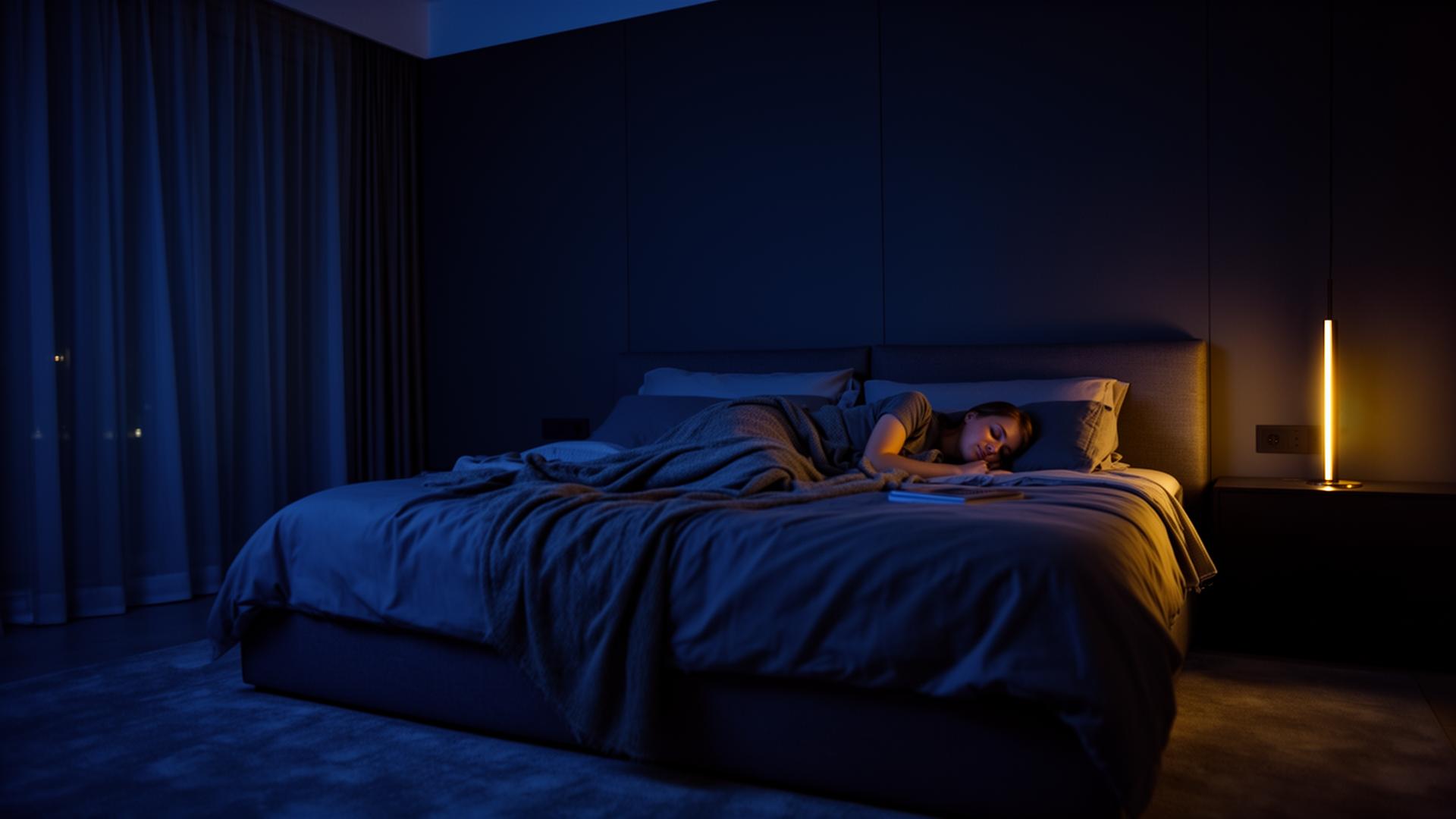
No wearables to irritate sensitive skin or disrupt sleep. The contactless sensor works through blankets above your bed.
02
Record Position & Audio Events
Komori is designed to record body position, movement patterns, and on-device audio-event classifications such as snoring, coughing, and alarms. No charging, no wearable to remember.
03
Review Your Own Data
Komori is designed so you can export your own data and, if you choose, share it with a sleep clinician. Komori is not a medical device and does not diagnose, treat, or prevent any condition.
Features
What You'll Discover
On-Device Sound-Event Classification
Komori is designed to classify common sleep sounds — snoring, coughing, talking, alarms — on-device. Only audio features (classification labels) are recorded. Raw audio is not kept anywhere unless you explicitly ask for it.
Position Breakdown
Komori is designed to record sleep position over the course of a night for personal review alongside other patterns.
Movement Awareness
Komori is designed to track movement patterns through the night. The device does not detect, diagnose, or treat any condition.
Exportable Personal Data
Komori is designed so you can export your own data and share it with a sleep clinician if you choose to.
Bedroom Environment
Komori is designed to record ambient temperature and humidity trends in the bedroom for personal review.
Personal Journal
Komori is designed to let you keep an optional journal alongside overnight position and environment data for personal review.
Background
A Brief Overview of Snoring
The information below is educational and is not a substitute for evaluation by a clinician.
Sleep position is one of several factors researchers examine when looking at why snoring varies from night to night and from person to person. Findings vary across studies and across individuals — what a person experiences personally is best understood with the help of a qualified clinician, not a consumer device.
What Snoring Is
Snoring is the sound produced when air moves past relaxed tissues in the upper airway during sleep, causing them to vibrate. It exists on a spectrum from benign to a clue to underlying sleep-disordered breathing.
When to See a Clinician
Loud habitual snoring, witnessed pauses in breathing, gasping or choking at night, or excessive daytime sleepiness are all reasons to consult a sleep clinician. Diagnosis of conditions like obstructive sleep apnea requires a sleep study.
Where to Learn More
The American Academy of Sleep Medicine (sleepeducation.org) and the American Sleep Apnea Association publish patient-facing educational materials and clinician directories.
For diagnosis, treatment, or management of snoring, sleep apnea, or any medical condition, speak with a qualified healthcare provider.
Night Review
An Example Night Review
Illustrative only — a mock of how a personal night summary may look.
K
Last Night · Mon Mar 8
7h 32m total · 96% in-bed
Position Breakdown
Back68%
Left Side21%
Right Side11%
Night Timeline
11:42 pmSettled in bed
12:18 amPosition changed
2:05 amAudio event classified — snoring
3:37 amRolled to back
3:44 amShifted to side
5:20 amExtended stillness
7:14 amOut of bed
14
Movements
3
Audio events
68%
Back sleep %
6
Position shifts
Komori is designed to surface a personal overview of position, movement, and on-device audio-event classifications from the night. The data is for personal review and, optionally, for sharing with a sleep clinician. Komori is not a medical device and does not diagnose, treat, or prevent any condition.
Why Komori
Why Komori?
vs. Wrist Wearables
Wrist-based trackers (Apple Watch, Oura, Whoop, Fitbit) can feel uncomfortable for sleep and don't capture body position.
vs. Standalone Audio Apps
Phone-based audio apps (SnoreLab and similar) record from the nightstand but don't capture body-position data.
vs. Chest-Strap Monitors
Chest straps (Polar and similar) can feel uncomfortable for overnight wear.
Who This Page Is For
Readers this content may help
This is general background reading. It is not personalized medical advice.
Curious Readers
People exploring what snoring is, what may influence it, and how it connects to sleep quality.
Researchers
Researchers and graduate students studying sleep-disordered breathing, body position, and overnight monitoring.
Clinicians
Sleep clinicians curious about contactless approaches to recording overnight body position and on-device audio-event classification.
Family Members
Partners and family members wanting general background on snoring before suggesting their loved one see a clinician.
Why I'm Building This
This is personal.

My twin boys got sepsis in the NICU. One of them was infected three times — the only documented case. All I wanted was to know they were okay.
Those nights changed everything for me. I couldn't stop thinking about how helpless it felt to not know what was happening while someone you love is sleeping. That question — "are they okay right now?" — never really left me. It followed me through 20 years of building data systems, through designing Owlet's data pipeline, through leading technology at SAMi Alert. Every role taught me something, but the question was always the same.
I built Komori for families like mine. Families who lie awake wondering. Families searching for insights that lead to answers. You spend a third of your life asleep. The night has answers. But you can't act on what you can't see.
Komori opens that black box. 60GHz radar that sees through blankets. No camera. No wearable. No video. Just data nobody's been able to give you before.
I designed every system. Every algorithm. This isn't a side project. It's the reason I learned everything I know.
Dovy Paukstys, Founder
Former Senior Solution Architect at Owlet Baby Care · Fractional CTO of SAMi Alert · 20 years in data engineering
Stay in the Loop on Komori
Join the free waitlist for launch updates on Komori — a general wellness device in development.
No spam. Just launch updates, pricing, and product progress. Komori is not a medical device and does not diagnose, treat, or prevent any condition.
From the Blog
Related reading from the Komori Care blog.

FAQ