What a Pulse Oximeter Actually Sees at Night
Dovy Paukstys
Founder, Komori Care
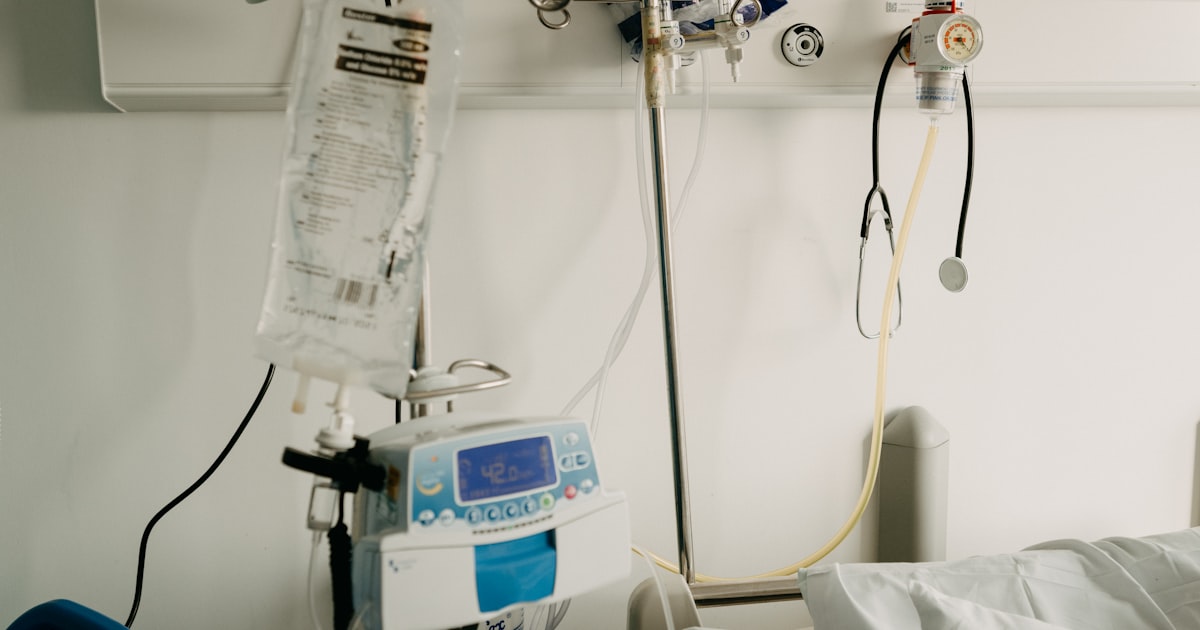
The Number That Ruins Your Morning
You open the app. Last night's blood oxygen chart has a jagged red section around 3 a.m. that dipped to 88%. There's a little info bubble that says "consult a healthcare provider."
Now you're googling at 6:15 a.m. with a knot in your stomach.
I want to explain what that chart is actually measuring, because the gap between what people think a pulse oximeter sees and what it really sees is enormous. Some of that gap is physics. Some of it is a real, documented accuracy problem that hits some people harder than others.
This is educational, not medical advice, and nothing here is diagnostic. If your readings worry you, the answer is a doctor, not a forum thread.
Key Facts
- Pulse oximeters compare how tissue absorbs two wavelengths of light — 660 nm (red) and 940 nm (infrared) (StatPearls)
- Typical device accuracy is calibrated over 70% to 100% saturation, with error of about 2% to 4% (StatPearls)
- Most healthy people sit between 95% and 100% (FDA)
- In one large study, Black patients had roughly three times the rate of missed low oxygen compared with White patients (NEJM, 2020)
- Pulse oximeters sold as general wellness products are not reviewed by the FDA before sale (FDA)
- The AASM strongly recommends that screening tools not be used to diagnose sleep apnea without a proper sleep test (AASM 2017 guideline)
How It Works: Two Colors of Light
A pulse oximeter is a light meter with an opinion.
Hemoglobin is the protein in your red blood cells that carries oxygen. When it's loaded with oxygen, it absorbs light differently than when it's empty. Specifically, deoxygenated and oxygenated hemoglobin absorb differently at 660 nanometers (red light) and 940 nanometers (infrared) [^1].
So the device shines both, measures how much comes out the other side, and computes a ratio. That ratio maps to a percentage — SpO2, which just means the estimated percentage of your hemoglobin carrying oxygen.
There's one more trick. Your finger contains bone, skin, fat, and venous blood, and none of that is what we care about. What the device does is watch the part of the signal that pulses with your heartbeat, because that pulsing part is arterial. Everything steady gets subtracted out.
That's the whole idea. And it's a small signal to work with: the pulse amplitude "accounts only for 5% of available pulse oximeter signals for analysis" [^1]. Ninety-five percent of what the sensor sees is noise it has to throw away.
Two other things worth knowing. First, the calibration range. Devices are typically calibrated from 70% to 100% saturation with an accuracy of about 2% to 4% [^1]. Below 70% they're extrapolating. Second, SpO2 is an estimate of arterial saturation, not a direct measurement of it — the direct measurement requires drawing blood.
What a Normal Night Looks Like
For most healthy adults, oxygen saturation sits between 95% and 100%, and can run lower in people with lung or heart conditions or at higher altitudes [^2].
Overnight, you'll see small wobbles. Breathing changes across sleep stages, and REM sleep in particular is a bit less stable. A brief dip is not automatically an event.
What clinicians look at instead is the shape of the whole night: the average saturation, the lowest point, how much of the night was spent below a threshold, and how often the trace drops.
Desaturations and the ODI
A desaturation is a drop from the recent baseline by a defined amount — usually 3% or 4%, depending on the scoring rule being used. Which number you pick changes how many events get counted, which is a real and ongoing argument in sleep medicine.
The oxygen desaturation index (ODI) is simply how many of those drops happen per hour of recording. It's the oximetry cousin of the apnea-hypopnea index.
ODI does track breathing problems reasonably well. In a study of 475 surgical patients, an ODI above 10 caught moderate-to-severe sleep-disordered breathing with 93% sensitivity and 75% specificity [^3]. That 75% specificity is the important half: a fair number of people flagged by ODI alone don't have what the flag suggests.
And note the population — surgical patients, average age 60. Numbers from one population don't transfer cleanly to a healthy 32-year-old wearing a smartwatch.
The Things That Wreck a Reading
This is the part consumer apps rarely put in front of you. A pulse oximeter reading can be wrong for a lot of mundane reasons.
| What interferes | Why it matters | Source |
|---|---|---|
| Motion | Movement swamps the tiny pulsatile signal | [^1] |
| Cold hands | Poor blood flow to the finger; about 33°C is optimal | [^1] |
| Low blood pressure / poor perfusion | No strong pulse means nothing to measure | [^1] |
| Nail polish (black or blue) | May interfere, though studies are mixed | [^1] |
| Ambient light | Room light leaking into the sensor adds error | [^1] |
| Carbon monoxide, methemoglobin | Change blood color; readings can look falsely fine | [^1] |
| IV dyes | Methylene blue and similar absorb the same light | [^1] |
| Darker skin pigmentation | Saturation may be overestimated by about 2% | [^1] |
| Tobacco use, skin thickness | Listed by the FDA as accuracy factors | [^2] |
Now add the sleep context. You're asleep. You roll over. Your hand goes under a pillow or over the edge of the bed and gets cold. That's several rows of that table at once, all night long.
The Skin Tone Problem, Said Plainly
This one deserves its own section because it's serious and it's well documented.
In 2020, researchers published a comparison of pulse oximeter readings against direct arterial blood measurements. They looked for occult hypoxemia — cases where actual arterial oxygen was below 88% while the pulse oximeter was showing a comfortable 92% to 96%.
In the University of Michigan cohort, occult hypoxemia showed up in 11.7% of measurements in Black patients versus 3.6% in White patients. In a larger multicenter cohort covering 37,308 paired measurements, it was 17.0% versus 6.2%. The authors' summary: "Black patients had nearly three times the frequency of occult hypoxemia that was not detected by pulse oximetry as White patients" 1.
A systematic review pooling 32 studies and 6,505 participants put numbers on the average size of the bias: about 1.11% overestimation for people with high skin pigmentation, and 1.52% for participants described as Black or African American 2.
Those averages sound small. The authors argue the average is the wrong thing to focus on. Their finding was that "the associated imprecision is unacceptably large (pooled SDs > 1%)" — meaning individual readings scatter widely around that average. And as they put it, "even small amounts of mean bias, when at the margins of diagnostic thresholds, could have an impact on diagnostic accuracy" 2.
Translation: if a threshold sits at 90% and your device runs high by an amount that varies unpredictably, the error lands exactly where the decision gets made.
The FDA now states that "current scientific evidence suggests there are some accuracy differences in pulse oximeter performance between individuals with lighter and darker skin pigmentation," and published draft guidance in January 2025 proposing changes to how medical pulse oximeters get tested across skin tones 3.
This is a design failure, not a patient failure. It's worth knowing about if you're the person the device was calibrated least well for.
Wrist and Ring Sensors Have an Extra Problem
Finger clips shine light through tissue. Watches and rings shine light into the wrist or finger and read what bounces back. Reflectance sensing is harder.
A 2024 study tested a commercial smartwatch against a full sleep study in 51 people. Overnight SpO2 came out with a root-mean-square error of 2.54% and a bias of 0.91%, which the authors described as reliable overnight monitoring 4.
But read the limitations, because they're the story. Only 47.7% of the recording time produced valid SpO2 data — over half the night got discarded. The sample was too small to assess accuracy in people with darker skin tones. It was a single night per person 4.
That's a well-run study reporting honestly. It is not a green light to treat your watch's overnight chart as a medical record. If you want more on this pattern across consumer devices, we went through it in what sleep tracker accuracy claims actually mean.
Consumer SpO2 Is Not a Diagnostic
Here's the regulatory reality, in the FDA's own words. Some pulse oximeters are intended for medical purposes. Others "are sold as general wellness products or sporting/aviation products. These are not reviewed or evaluated by the agency before being available to the public" 3.
The FDA is also direct about interpretation: "Only a health care provider can diagnose a medical condition such as hypoxia (low oxygen levels)," and readings "should be considered in context with other information, including signs and symptoms of low oxygen" 3.
Sleep medicine says the same thing about screening in general. The AASM's 2017 diagnostic guideline gives a strong recommendation "that clinical tools, questionnaires and prediction algorithms not be used to diagnose OSA in adults, in the absence of polysomnography or home sleep apnea testing" 5. And the AASM's position on consumer sleep gear is blunt: given the lack of validation and clearance, these technologies "cannot be utilized for the diagnosis and/or treatment of sleep disorders at this time," though they "may be utilized to enhance the patient-clinician interaction" 6.
That last clause is the useful one. Your data isn't worthless. It's just not a verdict. Bring the chart to the appointment; don't let the chart replace the appointment. Same logic applies to snoring apps used as apnea screeners.
Where Komori Fits
Short and honest: Komori does not measure blood oxygen. Not on the wrist, not on the finger, not from across the room. No SpO2 number, no desaturation index, nothing in that family. If that's the measurement you need, you need a device built for it and a clinician reading it.
Komori is a contactless system that senses from above the bed — no camera, no wearable — with a base unit on the nightstand handling power, Wi-Fi, and local processing. When it ships, it's designed to capture sleep position, movement and restlessness, bed-exit events, sound events, and room conditions like temperature, humidity, CO2, light, and noise. That's the whole list. We keep a running page on what Komori can't do precisely so nobody buys it expecting something it isn't.
Why build the narrow thing? Because the narrow thing can run every night for months without a finger clip falling off, and because position and room conditions are two of the few sleep variables an ordinary person can actually change.
If the Chart Worried You
Don't self-diagnose from an overnight oxygen trace. Also don't dismiss it.
Write down what you saw and when. Add the things a number can't show: whether you snore, whether anyone has seen you stop breathing, whether you wake up gasping, whether you're exhausted at 2 p.m. no matter how long you were in bed. That combination is what a clinician can work with.
Then take it to a doctor and ask whether a proper sleep test is warranted. A finger clip and a wrist sensor are both estimating. A sleep study measures.
Footnotes
-
Sjoding MW, Dickson RP, Iwashyna TJ, Gay SE, Valley TS. "Racial Bias in Pulse Oximetry Measurement." New England Journal of Medicine, 2020. ↩
-
Shi C, et al. "The accuracy of pulse oximetry in measuring oxygen saturation by levels of skin pigmentation: a systematic review and meta-analysis." BMC Medicine, 2022;20:267. ↩ ↩2
-
U.S. Food and Drug Administration. "Pulse Oximeter Basics." Consumer Updates, content current as of March 2025. ↩ ↩2 ↩3
-
Browne SH, Vaida F, Umlauf A, Kim J, DeYoung P, Owens RL. "Performance of a commercial smart watch compared to polysomnography reference for overnight continuous oximetry measurement and sleep apnea evaluation." Journal of Clinical Sleep Medicine, 2024. ↩ ↩2
-
Kapur VK, et al. "Clinical Practice Guideline for Diagnostic Testing for Adult Obstructive Sleep Apnea." Journal of Clinical Sleep Medicine, 2017;13(3):479-504. ↩
-
Khosla S, et al. "Consumer Sleep Technology: An American Academy of Sleep Medicine Position Statement." Journal of Clinical Sleep Medicine, 2018;14(5):877-880. ↩
You can choose a position at lights-out. Knowing what you held until morning is the hard part.
Komori is a contactless monitor that logs which position you slept in, through blankets, with no camera and nothing to wear. Pre-launch — join the list and we'll tell you when it ships.
Keep reading
Want to see your sleep position data?
Join the free waitlist for launch updates. Or lock in founder pricing with the Insider Pass ($49, credited toward your purchase).