
◆ Educational Resource
Seizures: Causes, Epilepsy, and Lookalikes
Important: Komori does not detect, identify, or classify seizures, and Komori is not for epilepsy patients. Households living with epilepsy should consult a neurologist and use FDA-cleared / clinically validated seizure-detection devices as directed by their care team.
This page is background on what a seizure is, what can provoke one, how that differs from an epilepsy diagnosis, and events that can look like a seizure. It is not medical advice. It is not a product pitch.
Komori is a general wellness device in development. It is not FDA-cleared. It is not a medical device. It is not intended to diagnose, treat, prevent, or cure any condition. It does not detect, identify, or classify seizures and is not for epilepsy patients.
Position & Movement Data
General Wellness Device
Private by Design
No Wearable Required
How It Works
How Komori Works
01
Sleep Comfortably
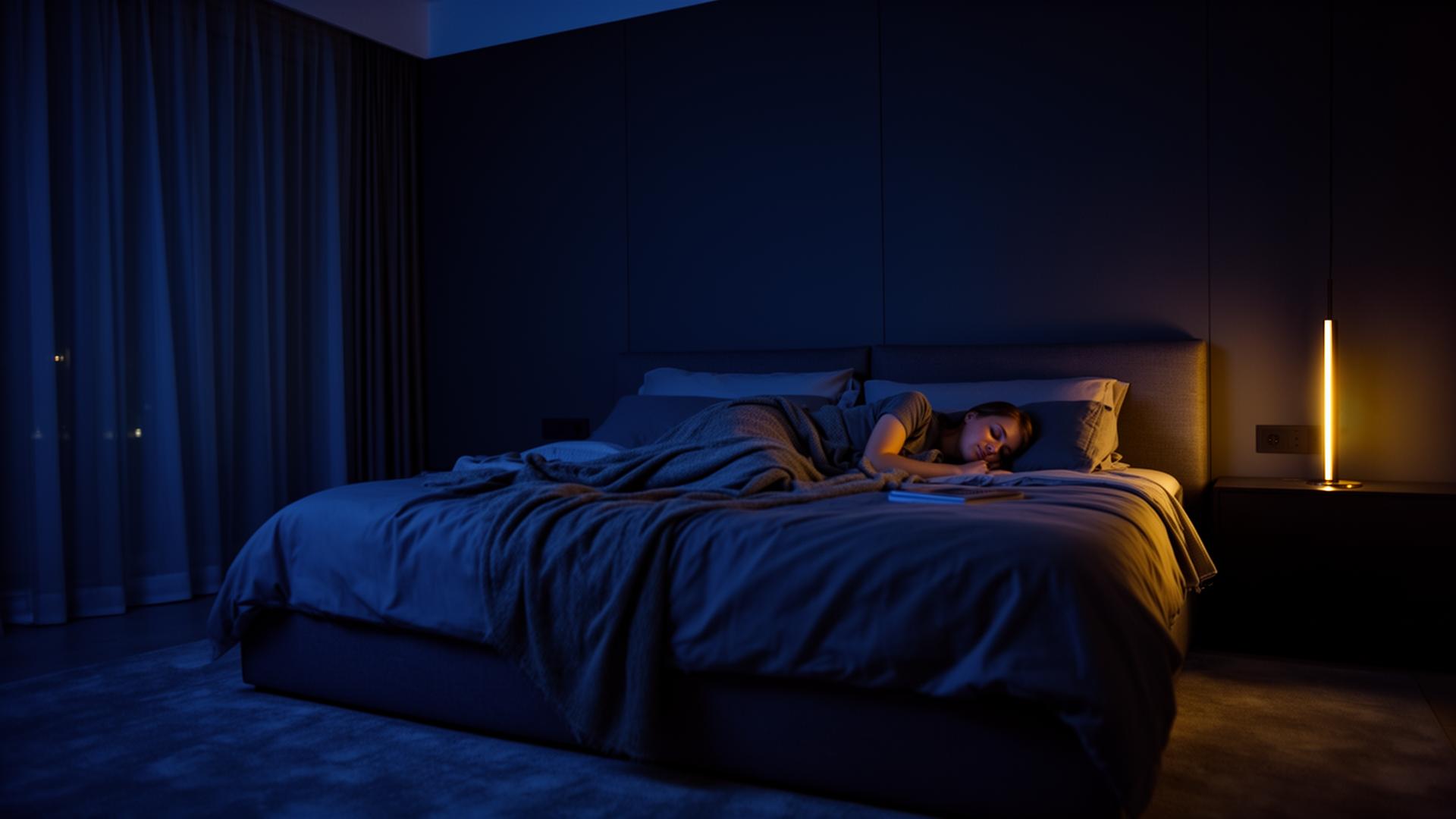
Komori is designed so you can sleep without a wearable. The contactless sensor is designed to work through blankets above the bed.
02
Record Position & Movement
Komori is designed to record body position, movement patterns, and bedroom environment (ambient temperature, humidity) overnight. It is designed so you do not have to charge a wearable or remember to put one on.
03
Review Your Own Data
Komori is designed so you can export your own data and, if you choose, share it with your healthcare provider. Komori does not detect, diagnose, or treat seizures or any condition.
Features
What You'll Discover
Position & Restlessness Patterns
Komori is designed to record sleep position and movement patterns over the course of a night. Personal patterns may be worth discussing with your healthcare provider.
Sleep Efficiency Overview
Komori is designed to surface metrics like time in bed and wake events for personal review.
Movement Awareness
Komori is designed to track movement awareness through the night. The device does not detect, diagnose, or treat any condition.
Bedroom Environment
Komori is designed to record ambient temperature and humidity trends in the bedroom for personal review.
Exportable Personal Data
Komori is designed so you can export your own data and share it with your healthcare provider if you choose to.
Personal Journal
Komori is designed to let you keep an optional journal alongside overnight position and environment data for personal review.
Background
What a seizure is
Educational only. Sources: ILAE, CDC, and NINDS public pages. This is not a diagnosis.
The version people picture from TV is a tonic-clonic seizure. The older name was grand mal. That is one kind. It is not the most common.
ILAE, 2005
An epileptic seizure is transient signs or symptoms from abnormal excessive or synchronous neuronal activity in the brain.
CDC
A seizure is a change in normal brain activity that lasts seconds to minutes. About 1 in 10 people in the US may have a seizure in their lifetime. Most never meet criteria for epilepsy.
NINDS
Having a seizure does not by itself mean epilepsy. That call belongs to a clinician.
ILAE's 2017 scheme groups seizures by onset: focal, generalized, or unknown. NINDS notes that about 60% of people with epilepsy have focal seizures. Older labels map roughly as petit mal to absence, simple partial to focal aware, and complex partial to focal impaired awareness.
For diagnosis, treatment, or management of any condition, speak with a qualified healthcare provider.
Causes
What can provoke a seizure
Clinicians split events into provoked and unprovoked. First seizures, febrile seizures, nonepileptic events, and eclampsia can involve seizures or seizure-like episodes and still not be epilepsy.
Provoked / acute symptomatic
A temporary factor acting on an otherwise typical brain. Examples include fever, concussion, and alcohol withdrawal. NINDS also lists extreme blood sugar, sudden chemical changes, eclampsia, and kidney or liver failure.
Unprovoked
An event without that immediate reversible trigger. Only a clinician can classify a given event. Do not do that from a webpage.
When a cause is found
CDC: less than half of newly diagnosed epilepsy cases have a known cause. When one is found, cysticercosis is the leading cause worldwide, then stroke, brain tumor, TBI, and genetic factors. Epilepsy is not contagious.
Event vs diagnosis
A seizure is not the same as epilepsy
A seizure is an event. Epilepsy is a diagnosis. NINDS: having a seizure does not by itself mean epilepsy.
ILAE's 2014 practical definition of epilepsy is any of the three paths below.
Two unprovoked or reflex seizures
More than 24 hours apart.
One unprovoked or reflex seizure
Plus a 10-year recurrence risk of at least 60%, similar to the risk after two. That 60% path is a tool for clinicians. It is not a DIY calculator.
An epilepsy syndrome
A clinician diagnoses the syndrome. Resolved is not the same as cured. ILAE uses resolved for an age-dependent syndrome past the applicable age, or 10 years seizure-free and 5 years off antiseizure medication.
CDC: about 1 in 10 people in the US may have a seizure in their lifetime. Most never meet criteria for epilepsy. CDC (2021): about 2.9 million US adults with active epilepsy. 2022: about 456,000 children age 17 and under.
After a first unprovoked seizure in adults, AAN/AES notes the chance of another is greatest in the first two years, at 21–45%. ILAE cites older figures of 40–52%.
More on this overlap: Epilepsy and Sleep and epilepsy vs a seizure.
Lookalikes
Events that can look like a seizure
Diagnosis belongs to a clinician, typically a neurologist or epileptologist. History plus witnesses come first, then EEG, MRI, and blood work as indicated. A normal EEG does not rule epilepsy out.
Nonepileptic events
NINDS: these can look like seizures without the electrical discharge.
PNES
Psychogenic nonepileptic seizures do not respond to antiseizure drugs.
Other lookalikes
NINDS also lists narcolepsy, Tourette syndrome, and cardiac arrhythmia.
Video-EEG
This is the tool clinicians use to tell events apart. Do not guess from a video or a webpage.
See how epilepsy is diagnosed and types of seizures.
First aid pointer
If you are with someone during a seizure, CDC first aid is Stay, Safe, Side. Call 911 if it lasts more than 5 minutes. Do not put anything in the mouth. That is public first aid, not a care plan. Read the CDC-based explainer.
Night Review
An Example Night Review
Illustrative only — a mock of how a personal night summary may look.
K
Last Night · Mon Mar 8
7h 52m total · 98% in-bed
Position Breakdown
Left Side52%
Back34%
Right Side14%
Night Timeline
11:30 pmSettled — left side
12:45 amRolled to back
1:20 amRestlessness above baseline
2:10 amShifted to side
4:05 amBedroom temperature shift
5:50 amExtended stillness
7:22 amOut of bed
2
Restless periods
8
Position shifts
1
Temp trends
52%
Side sleep %
Komori is designed to surface a personal overview of position and movement patterns from the night. The data is for personal review and, optionally, for sharing with a healthcare provider. This mock does not show seizure detection. Komori does not detect seizures. It is not a medical device and does not diagnose, treat, or prevent any condition.
Why Komori
Why Komori?
vs. Wrist Wearables
Many wrist wearables can feel uncomfortable for sleep and don't capture body position.
vs. Smart Rings
Smart rings focus on wrist-style metrics and don't capture sleep position.
vs. Chest-Strap Monitors
Chest straps can feel uncomfortable for overnight wear.
Who This Page Is For
Readers this content may help
This is general background reading. It is not personalized medical advice. It is not a page for choosing a seizure-detection product.
Curious Readers
People who want general background on what a seizure is, what can provoke one, and how that differs from an epilepsy diagnosis.
Researchers
Researchers and students looking for a short, sourced overview of seizure vs epilepsy and common lookalikes.
Clinicians
Clinicians who want a plain-language page they can point curious readers to. It is not a clinical protocol.
Family Members
Family members who want general background. This is not a page for choosing a seizure-detection product.
Why I'm Building This
This is personal.

My twin boys got sepsis in the NICU. One of them was infected three times — the only documented case. All I wanted was to know they were okay.
Those nights changed everything for me. I couldn't stop thinking about how helpless it felt to not know what was happening while someone you love is sleeping. That question — "are they okay right now?" — never really left me. It followed me through 20 years of building data systems, through designing Owlet's data pipeline, through leading technology at SAMi Alert. Every role taught me something, but the question was always the same.
I built Komori for families like mine. Families who lie awake wondering. Families searching for insights that lead to answers. You spend a third of your life asleep. The night has answers. But you can't act on what you can't see.
Komori opens that black box. 60GHz radar that sees through blankets. No camera. No wearable. No video. Just data nobody's been able to give you before.
I designed every system. Every algorithm. This isn't a side project. It's the reason I learned everything I know.
Dovy Paukstys, Founder
Former Senior Solution Architect at Owlet Baby Care · Fractional CTO of SAMi Alert · 20 years in data engineering
Stay in the Loop on Komori
Join the free waitlist for launch updates on Komori, a general wellness device in development.
No spam. Just launch updates, pricing, and product progress. Komori is not a medical device and does not diagnose, treat, or prevent any condition.
From the Blog
Related reading from the Komori Care blog.


FAQ