Your Sleep Changes With the Seasons More Than You Think
Dovy Paukstys
Founder, Komori Care
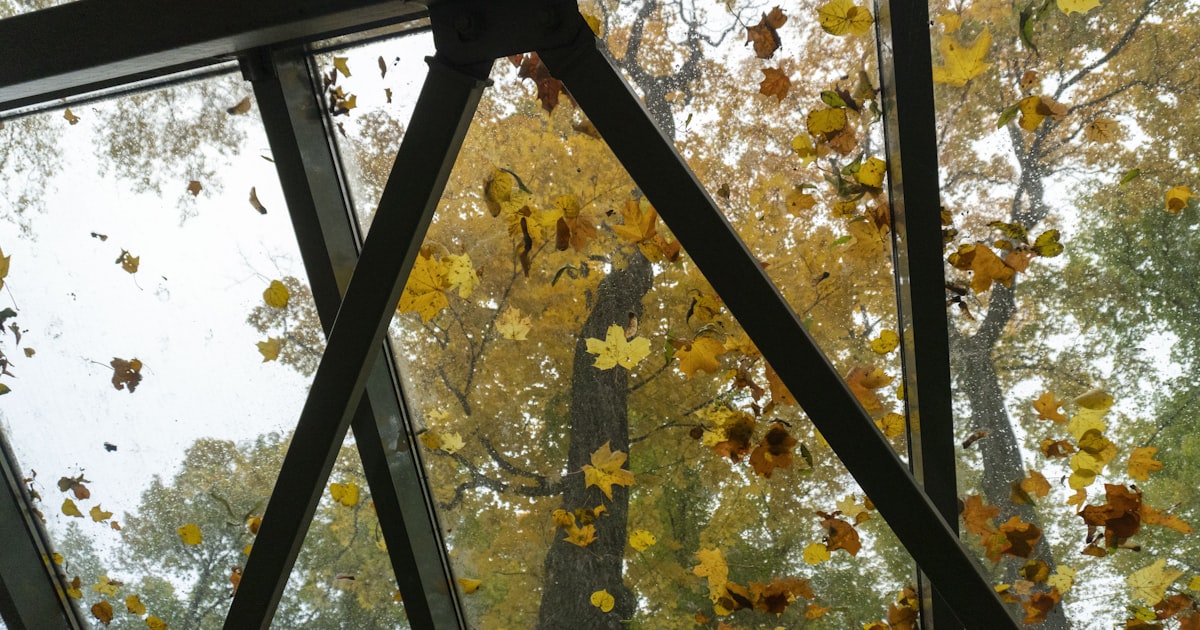
It's October and Something Feels Off
The mornings are dark now. You're hitting snooze more than you did in July. Bedtime creeps earlier some nights and later on others, and the whole thing feels less organized than it did three months ago.
Most people respond by blaming themselves. Bad discipline. Too much screen time. Getting lazy.
Some of that might be true. But a chunk of it is a seasonal pattern visible in large datasets, driven by something you have almost no control over: how much daylight there is.
This is the single strongest argument for comparing your sleep to your own history instead of to a fixed target. A "bad" October week measured against your July baseline is often just October.
Key Facts
- Every extra hour of daylight was associated with 3.6 minutes shorter sleep and 5.4 minutes earlier wake times in a year-long study of 216 adults (npj Digital Medicine, 2021)
- Sleep in spring ran 12.6 minutes shorter than winter, with wake times 8.4 minutes earlier — statistically real, but small (npj Digital Medicine, 2021)
- REM sleep peaked around 100 minutes in winter and fell to roughly 70 in spring and summer in a sleep-clinic group (Frontiers in Neuroscience, 2023)
- A week of camping with only natural light re-synced people's internal clocks to sunrise and sunset (Current Biology, 2013)
- Seasonal affective disorder affects 1% to 10% of people, rising sharply with distance from the equator — 9.7% in New Hampshire versus 1.4% in Florida (StatPearls)
- Sleep medicine's professional body wants the clock change abolished in favor of permanent standard time (JCSM, 2023)
What the Data Actually Shows
The cleanest study on this tracked 216 adults across the United States for slightly over a year, collecting 51,836 nights of sleep alongside local weather [^1].
Their headline findings, with winter as the comparison point:
- Spring: sleep 12.6 minutes shorter, wake times 8.4 minutes earlier, bedtimes 4.2 minutes later
- Summer: wake times 7.8 minutes later, bedtimes 6 minutes later
- Fall: wake times 1.8 minutes earlier, everything else roughly flat
And the mechanism candidate: each additional hour of daylight was associated with 3.6 minutes less sleep and a 5.4-minute earlier wake time [^1].
Here's the honest part. The authors describe these as "small but statistically significant" effects. Twelve minutes is not a crisis.
But that's a group average, which flattens individual variation. Some people barely move across the year; others move a lot. The average tells you which way the tide runs, not how high it goes in your particular harbor.
Sleep Architecture Moves Too, Not Just Timing
Duration is the boring part. The more interesting question is whether the structure of sleep shifts by season — how much deep sleep, how much REM.
A 2023 study did three-night sleep studies on patients at an urban sleep clinic across a full calendar year [^2]. Because these were full polysomnography recordings with brain-wave measurement, the stage data is real, not estimated from a wrist.
What they found, in 188 patients:
- REM sleep peaked around 100 minutes in January, September, and December, and dropped to roughly 70 to 72 minutes in April and June. That's a 30-minute swing, and it was statistically significant (p = 0.009).
- REM latency — how long after falling asleep before you hit your first REM period — was shortest in January and September and longest in May and November (p = 0.010).
- Deep sleep (N3) sat around 60 to 70 minutes from December through May, then dropped sharply to about 30 minutes in September.
- Total sleep time ran about 62 minutes longer in January than June — but that difference was not statistically significant.
I'm flagging that last point on purpose. The headline you'll see is "people sleep an hour more in winter." The study's own data doesn't support that claim at the level of statistical confidence. The architecture findings held up. The duration finding didn't.
There's a second limit worth naming: these were patients with sleep-related disorders at a clinic, not healthy volunteers. The authors say so directly. A group like that may show seasonal effects differently than the general population.
Why Daylight Runs This
The mechanism isn't mysterious. Light is the main signal your internal clock uses to figure out what time it is.
One small, beautiful experiment makes this vivid. Researchers measured people's circadian timing during a normal week of modern life — electric lights, screens, indoor days — then again after a week of camping with nothing but sunlight and campfires [^3].
Modern life produced less sun during the day, more light after sunset, and a delayed internal clock. After a week outdoors with only natural light, participants' clocks locked onto solar time: biological night began at sunset and ended just before wake time, right after sunrise.
Your clock isn't fixed. It's constantly nudged by light. In October the nudge differs from June, and your body is responding correctly to the signal it's getting.
Morning light is the strongest lever you have. Getting outside within an hour of waking does more for your clock in October than any bedtime routine.
A Preprint With Two Years of Wearable Data
A December 2023 preprint (not yet peer reviewed) followed 543 participants for two years, pairing Fitbit data with depression scores collected every two weeks — 10,018 questionnaire records in total [^4].
The seasonal finding: participants showed shorter and later sleep, more daytime activity, and delayed circadian rhythms in summer compared to winter. That's directionally consistent with the peer-reviewed work above.
The paper also reports that after accounting for season, higher depression scores were associated with reduced activity, more irregular behavior, and delayed rhythms.
Two cautions, both important. First, it's a preprint, so it hasn't cleared peer review. Second, and more fundamentally, these are associations. Nothing here shows that a delayed rhythm causes low mood or vice versa. The authors frame it as a potential digital biomarker, which is a careful way of saying "this pattern travels with depression," not "this pattern produces depression."
The Clock Change Is the Part That Actually Hurts
Gradual seasonal drift is your body doing its job. The clock change is a different animal: an abrupt one-hour shift imposed on a system that prefers to move slowly.
The American Academy of Sleep Medicine — the professional body for sleep physicians — has taken a formal position that the United States should eliminate seasonal time changes in favor of permanent standard time, "which aligns best with human circadian biology" 1.
That's not a soft preference. It's a position statement from the people who read this literature for a living.
If you're reading this in early October, the fall-back change is weeks away. Stop treating it as a one-day event. Shift your bedtime 10 to 15 minutes over several days rather than absorbing the whole hour at once. Your clock moves gradually whether you plan for it or not.
When Season Turns Into Mood
There's a point where seasonal change stops being an adjustment and becomes a clinical issue.
Seasonal affective disorder is depression that follows a seasonal pattern — typically starting in late autumn or winter and lifting by spring. Prevalence estimates run 1% to 10%, and the geography is stark: about 9.7% in New Hampshire versus 1.4% in Florida 2. Distance from the equator matters, which points straight back at daylight.
The sleep signature of winter-pattern SAD is distinctive: usually hypersomnia — sleeping too much, struggling to get up — alongside overeating and carbohydrate cravings. Summer-pattern depression, far rarer, runs the opposite way with insomnia and appetite loss 2.
Two circadian explanations are on the table: the photoperiod hypothesis (short winter days extend melatonin release in vulnerable people) and the phase shift hypothesis (rhythms drift out of alignment with your actual schedule) 2. Neither is settled. First-line treatment is bright light therapy — typically 10,000 lux for 30 minutes, ideally in the morning — often combined with therapy or medication 2.
Here's the line worth drawing. "October feels harder" is normal. "I can't get out of bed, I've stopped caring about things I liked, and this happens every single winter" is a pattern to bring to a doctor. Those are different situations and one of them has good treatments.
The Seasonal Cheat Sheet
| What changes | Direction | Rough size | Source |
|---|---|---|---|
| Sleep duration | Shorter in spring vs. winter | ~12.6 min | 3 |
| Wake time | Earlier in spring, later in summer | 8.4 min earlier / 7.8 min later | 3 |
| Bedtime | Later in spring and summer | 4–6 min | 3 |
| Effect of daylight length | More daylight = less sleep, earlier waking | 3.6 min / 5.4 min per extra hour | 3 |
| REM sleep | Higher in winter, lower in spring/summer | ~100 min vs. ~70 min | 4 |
| Deep sleep (N3) | Sharp dip in September | ~60–70 min down to ~30 min | 4 |
| Total sleep by season (clinic group) | Longer in winter — not significant | ~62 min, unconfirmed | 4 |
| Seasonal mood disorder | Rises with latitude | 1.4% Florida to 9.7% New Hampshire | 2 |
Use it to set expectations, not as a target to hit.
Compare Yourself to You, Not to June
Everything above adds up to one practical rule.
A single week is not data. If you're comparing this week's numbers to a personal best from August, you're comparing across a seasonal boundary and drawing a conclusion the comparison can't support. That's not self-awareness. It's noise with a narrative attached.
What actually works is a long baseline — ideally at least a year, so you can see this October against last October rather than against summer. That's the only comparison where a real change stands out from the seasonal background.
This is the same reasoning behind why we don't reduce a night to a single score.
Three things worth doing this month:
- Get morning light. Outside, within an hour of waking, even on a gray day. It's the strongest available signal to your clock.
- Keep the room cold and dark. Autumn is when people quietly overheat their bedrooms — see how temperature affects sleep.
- Move the clock change gradually. Ten or fifteen minutes a night across the week before it.
Where Komori Fits
Komori is a general wellness device with no camera and nothing worn on your body. It doesn't diagnose anything, and it isn't a substitute for a doctor or a sleep study.
When it ships, it's designed to record sleep position, movement and restlessness, bed-exit events, and the room around you — temperature, humidity, CO2, light, and noise — night after night in your own bed.
That last group is the seasonally interesting one. Bedroom conditions change enormously between June and January: windows shut, heat on, humidity down, ambient light shifted by hours. Most people never see those numbers, so when October feels different they blame their habits instead of their room.
The design goal is a record long enough that this October has last October to sit beside. Not a score. A baseline.
The Bottom Line
Your sleep in October is not your sleep in June, and the difference is measurable in real datasets across hundreds of people.
The seasonal effects are small on average and larger for some people. Sleep timing shifts with daylight length. REM appears to rise in winter. The clock change is the disruptive part, and sleep physicians have said so formally.
So stop grading October against July. Build a baseline long enough to see a year, and if the seasonal dip is severe enough that it flattens your mood every winter, that's a conversation for your doctor — not a discipline problem to fix on your own.
Footnotes
-
Rishi MA, et al. "Permanent standard time is the optimal choice for health and safety: an American Academy of Sleep Medicine position statement." Journal of Clinical Sleep Medicine, 2023. ↩
-
Munir S, Gunturu S, Abbas M. "Seasonal Affective Disorder." StatPearls Publishing, updated 2024. ↩ ↩2 ↩3 ↩4 ↩5
-
Mattingly SM, et al. "The effects of seasons and weather on sleep patterns measured through longitudinal multimodal sensing." npj Digital Medicine, 2021. ↩ ↩2 ↩3 ↩4
-
Seidler A, et al. "Seasonality of human sleep: Polysomnographic data of a neuropsychiatric sleep clinic." Frontiers in Neuroscience, 2023. ↩ ↩2 ↩3
You can choose a position at lights-out. Knowing what you held until morning is the hard part.
Komori is a contactless monitor that logs which position you slept in, through blankets, with no camera and nothing to wear. Pre-launch — join the list and we'll tell you when it ships.
Keep reading

Want to see your sleep position data?
Join the free waitlist for launch updates. Or lock in founder pricing with the Insider Pass ($49, credited toward your purchase).