How Temperature Affects Your Sleep: The Science of the Cool Bedroom
Dovy Paukstys
Founder, Komori Care
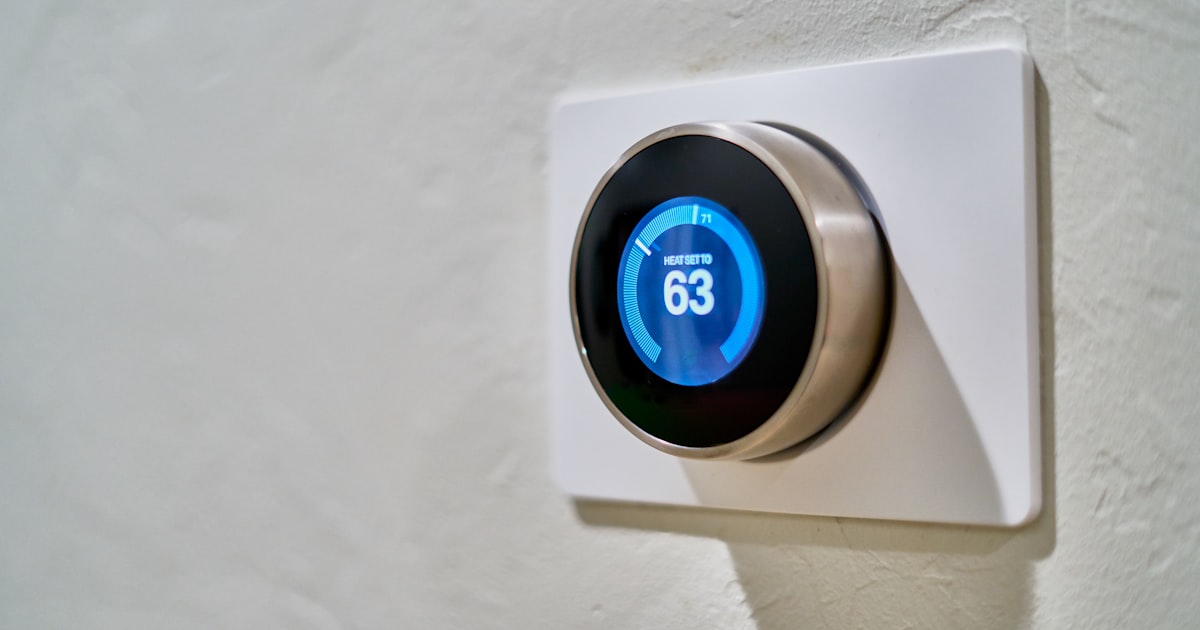
The One-Degree Problem
Your body temperature drops by about 1 to 2 degrees Fahrenheit as you fall asleep. This isn't a side effect of sleep — it's a prerequisite. Your brain actively orchestrates this temperature decline as part of the sleep initiation process. If your body can't cool down, you can't fall asleep efficiently.
This single fact explains more sleep problems than most people realize.
How Thermoregulation Works During Sleep
During the day, your core body temperature fluctuates around 98.6 degrees F (give or take — everyone's baseline is slightly different). In the evening, as melatonin begins to rise, your body starts dissipating heat. Blood vessels in your hands and feet dilate — a process called peripheral vasodilation — allowing warm blood to flow to your extremities where heat can radiate away.
This is why your feet get warm before you fall asleep. It's not random. It's your body's radiator system kicking in.
Core temperature reaches its lowest point around 4-5 AM, roughly 1.5-2 degrees below your daytime peak. After that, it gradually rises as cortisol increases and your body prepares for waking.
This temperature curve is one of the strongest circadian signals your body uses to regulate sleep. Disrupt it, and you disrupt sleep.
The Optimal Bedroom Temperature
The most commonly cited range is 65 to 68 degrees Fahrenheit (18-20 degrees Celsius). This isn't an arbitrary number — it's the range that best supports your body's need to dump heat during sleep.
Research from the University of South Australia found that the thermal environment is one of the most important factors affecting sleep quality. Subjects in rooms above 75 degrees F experienced significantly more wakefulness and less slow-wave (deep) sleep compared to those in the 65-68 degree range.
But here's the nuance: 65-68 is a starting point, not a prescription. Your optimal temperature depends on your bedding, your sleepwear, your body composition, your age, and whether you share a bed with someone (or a pet) who radiates heat.
Elderly adults, for instance, often sleep better at slightly warmer temperatures because they have less subcutaneous fat for insulation and less efficient vasodilation. Infants have different thermoregulatory needs entirely. The "right" temperature is the one that allows your specific body to cool down efficiently without making you so cold that you wake up shivering.
What Happens When It's Too Warm
When your bedroom is too warm, your body can't dissipate heat effectively. The consequences show up in your sleep architecture:
Less deep sleep. Slow-wave sleep — the most restorative stage — is particularly sensitive to thermal stress. Studies show that elevated ambient temperature reduces time spent in deep sleep even when subjects don't consciously wake up. You might "sleep" for eight hours and still feel unrested.
More awakenings. Heat stress increases the frequency of brief arousals — those micro-awakenings that you don't remember but that fragment your sleep. Your sleep tracker might not even register them, but your body does.
Reduced REM sleep. REM sleep is the stage where your body loses its ability to thermoregulate. During REM, you temporarily can't shiver or sweat. This means if your room is too warm, your body has to exit REM to cool itself. The result: truncated REM periods and less total REM sleep. Since REM increases in the second half of the night — when rooms tend to be warmest from accumulated body heat — this is a particularly insidious problem.
Increased heart rate. Your body works harder to maintain thermal homeostasis in a warm room. Heart rate stays elevated, which reduces the cardiovascular rest that sleep is supposed to provide.
What Happens When It's Too Cold
Being too cold is less disruptive than being too warm, but it's not harmless. Cold extremities (vasoconstriction instead of vasodilation) can make it harder to fall asleep. If you're genuinely cold, your body diverts blood from your extremities to your core, which is the opposite of what needs to happen for sleep onset.
The fix for cold is easier than the fix for heat: add blankets. You can always add insulation. Removing heat from a warm room is harder — especially if you don't have air conditioning or your partner has different temperature preferences.
Humidity: The Overlooked Variable
Temperature gets all the attention, but humidity plays a significant supporting role.
High humidity (above 60%) impairs your body's ability to cool itself through evaporation. Sweat doesn't evaporate efficiently in humid air, so your skin stays warm and clammy. Even if the thermostat reads 67 degrees, high humidity can make it feel 5-10 degrees warmer to your body.
Low humidity (below 30%) causes its own problems: dry nasal passages, sore throat, and skin irritation — all of which can disrupt sleep.
The sweet spot for sleep is generally 30-50% relative humidity. If you live in a humid climate and run air conditioning at night, your humidity is probably fine (AC dehumidifies). If you live in a dry climate or heat your home in winter, a humidifier might genuinely improve your sleep.
Your Bedroom Temperature Isn't Static
Here's something that seems obvious once you think about it but rarely gets discussed: your bedroom temperature changes through the night.
Your thermostat might be set to 68 degrees. But that doesn't mean your bedroom stays at 68 degrees. Common patterns include:
- HVAC cycling: Your system heats or cools to the target, then turns off until the temperature drifts far enough to trigger it again. These oscillations can mean your room swings 3-5 degrees in each direction.
- Accumulated body heat: You (and your partner, and your dog) radiate heat all night. Under blankets, this creates a microclimate that gets progressively warmer.
- Outside temperature changes: If your bedroom has exterior walls or windows, outside temperature changes affect indoor temperature — especially if your HVAC system is off or insufficient.
- Sunlight: In summer, early morning sun hitting your bedroom windows can cause a rapid temperature increase starting at 5 or 6 AM.
The net result is that your 2 AM bedroom temperature might be very different from your 11 PM bedroom temperature. And since 2-4 AM is when you're in lighter sleep and more susceptible to waking, this overnight temperature drift matters.
Connecting Temperature to Wake Events
This is where environmental monitoring gets interesting. If you track room temperature continuously alongside your sleep data, you can see correlations between temperature changes and sleep disruptions.
Komori is being built to monitor temperature and humidity throughout the night alongside movement and position data. When you see a cluster of position changes or a wake event at 3 AM, you can check whether the room temperature spiked at the same time. Do this for a week and patterns emerge.
Maybe your HVAC shuts off at midnight and the room climbs 4 degrees by 2 AM. Maybe your bedroom hits 73 degrees every night around the same time. Maybe your restless period from 4-5 AM coincides with the sun hitting your east-facing window.
Without continuous environmental data, these connections are invisible. You just know you slept badly. With the data, you can fix the root cause.
Practical Fixes
Most temperature-related sleep problems have straightforward solutions once you identify them:
Set your thermostat to 65-68 degrees F. Yes, it will feel cold when you get into bed. That's the point. Your body needs a cool environment to dump heat. You'll warm up under the blankets quickly.
Use breathable bedding. Cotton or linen sheets breathe better than synthetic materials. Moisture-wicking mattress covers help. That thick polyester comforter you love might be cooking you in the second half of the night.
Consider separate blankets. If you share a bed and have different temperature preferences, separate blankets let each person regulate independently. The Scandinavians figured this out a long time ago.
Manage humidity. A hygrometer costs ten dollars and tells you whether humidity is in the 30-50% range. If not, a humidifier or dehumidifier is a worthwhile investment.
Track before you tinker. Before buying a $2,000 cooling mattress pad, get a week of temperature data from your bedroom. You might discover that cracking a window or adjusting your thermostat schedule solves the problem for free.
The science is clear: your body needs to cool down to sleep well. Give it the environment to do that, and you'll notice the difference.
Keep reading
- Weighted blankets and sleep data — weight and warmth are hard to separate.
You can choose a position at lights-out. Knowing what you held until morning is the hard part.
Komori is a contactless monitor that logs which position you slept in, through blankets, with no camera and nothing to wear. Pre-launch — join the list and we'll tell you when it ships.
Keep reading


Want to see your sleep position data?
Get the Insider Pass and be first to experience Komori when it ships.