Put Two Sleep Trackers On. They Won't Agree.
Dovy Paukstys
Founder, Komori Care
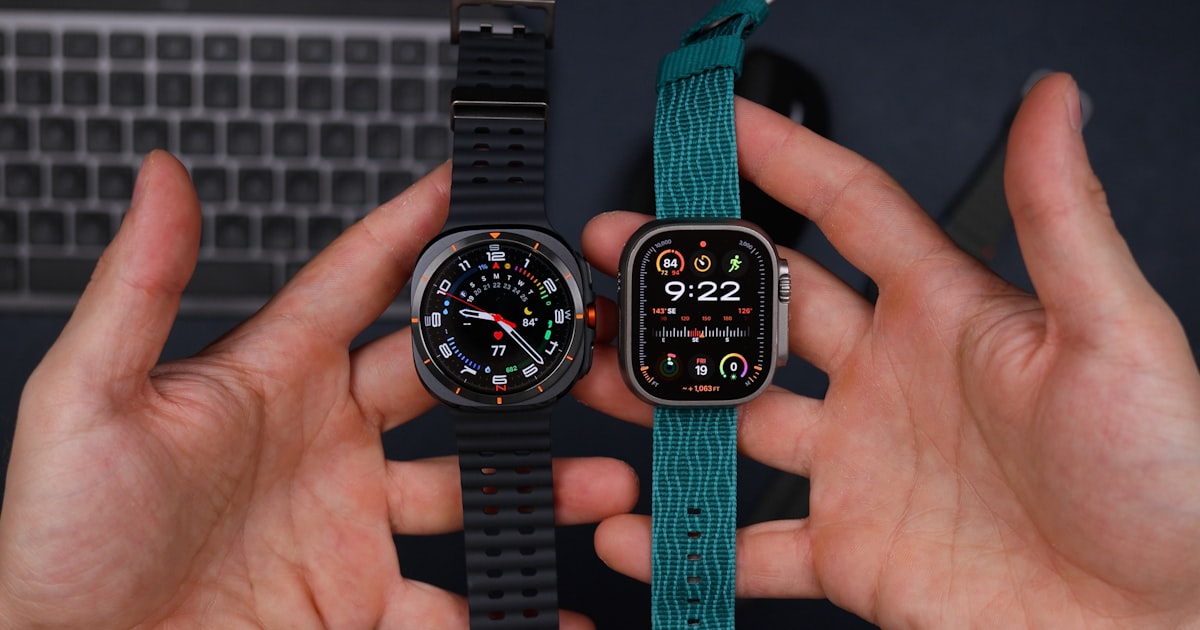
Same Night, Same Body, Two Answers
If you've ever worn two sleep trackers at once, you already know how this goes. One says 7 hours 14 minutes. The other says 6 hours 22 minutes. One gives you 94 minutes of deep sleep, the other gives you 41.
Same body. Same bed. Same night. Two stories.
The reflex is to ask which one is right. That's the wrong question. Neither of them measured your sleep — both of them estimated it, using different sensors and different math. Once you understand what's actually happening under the hood, the disagreement stops being mysterious and starts being predictable.
Key Facts
- Polysomnography — the overnight lab study — is the reference standard for objective sleep measurement (SLEEP Advances, 2025)
- Six wrist wearables tested against the lab on the same nights scored agreement (Cohen's kappa) ranging from 0.21 to 0.53 — moderate at best (SLEEP Advances, 2025)
- Devices are good at spotting sleep and bad at spotting wake: over 90% sensitivity for sleep, but 29% to 52% specificity for wake (SLEEP Advances, 2025)
- In a seven-device comparison, wake time was undercounted by as much as 49.5 minutes by one device on the same nights (Sleep, 2021)
- There is no shared testing standard. Device performance is judged by "a strongly heterogenic and sometimes lax range of methodological and analytical procedures" (Sleep, 2021)
- All six stage-tracking devices in one study differed from the lab on light sleep (Sleep, 2021)
Nobody Is Measuring Your Brain
Start here, because everything else follows from it.
A sleep stage is defined by brain activity. A lab study reads electrical signals from your scalp, movement from your eyes, and tension in your chin muscle. Those three signals are what "REM" and "deep sleep" mean. Not a feeling. Not a heart rate pattern. Specific electrical readings.
Your watch has none of those. It has a motion sensor and usually an optical heart-rate sensor pressed against your wrist. From those two streams, software guesses at the thing the lab measures directly.
That's not a scandal. It's just what the device is. But it explains the disagreement immediately: two different guessing machines, fed different raw inputs, will guess differently. For more on how far that gap runs, see wearable sleep stage accuracy.
Four Reasons Two Trackers Disagree
1. Different sensors, different raw data
A wrist device sees your wrist. A ring sees your finger. A contactless device sees your whole body from a distance. When you flick your hand at 2am, the wrist device sees a big event, the ring sees a smaller one, and a room sensor may see almost nothing.
They're not disagreeing about your sleep. They're agreeing about different inputs.
2. Different proprietary algorithms
Every manufacturer keeps its scoring model private. You do not get to see how your watch decided that 11:47 PM was the moment you fell asleep. Nobody outside the company does.
Two closed models, trained on different data, tuned toward different goals, will draw the line in different places. That's the single biggest source of divergence, and it is by design.
3. Different epoch and window handling
Sleep is scored in chunks, traditionally 30 seconds. But devices differ in how long a chunk they use, how much smoothing they apply, and how many quiet chunks in a row it takes before they'll call you "asleep."
Change that threshold slightly and total sleep time moves by many minutes. Two devices with an identical view of your body will still disagree if one requires five quiet minutes to declare sleep and the other requires two.
4. No shared testing standard
This is the structural problem. When researchers built a framework for evaluating consumer sleep technology, they described the existing state of the field bluntly: performance is evaluated by "a strongly heterogenic and sometimes lax range of methodological and analytical procedures," with variation in "recording setting, method of reference, and statistical procedures" [^1].
Translation: when two companies both say "validated," they may not have run remotely the same test. There's no shared meter stick. We took that apart in what sleep tracker accuracy claims actually mean.
What Happens When Researchers Actually Test Them Side By Side
Two studies do the thing you'd want done.
The first put seven consumer devices on 34 healthy adults against full lab studies — four wrist wearables and three non-wearable devices 1. The results weren't a clean ranking. They were a mess of device-specific biases. One device's total sleep time came in essentially spot-on, a difference of just 0.3 minutes. Others undercounted time spent awake by 47 to 50 minutes on the same nights. And every stage-tracking device differed from the lab on light sleep 1.
The second, published in 2025, put six wrist wearables on 62 adults, with each person wearing two to four devices simultaneously during one overnight lab session 2. That design is exactly the situation in this post's title: multiple devices, same wrist-ish location, same night.
Agreement was measured with Cohen's kappa, a score where 1.0 is perfect and 0 is chance-level guessing:
| Device | Agreement with lab (kappa) | Rough interpretation |
|---|---|---|
| Apple Watch Series 8 | 0.53 | Moderate — best of the group |
| Fitbit Sense | 0.42 | Moderate |
| Fitbit Charge 5 | 0.41 | Moderate |
| Whoop 4.0 | 0.21–0.37 range | Fair |
| Withings Scanwatch | 0.21–0.37 range | Fair |
| Garmin Vivosmart 4 | 0.21–0.37 range | Fair |
All figures from the six-device comparison 2.
Look at the spread. The best device roughly doubled the agreement of the weakest. If those two are on the same person on the same night, they are going to tell different stories, and the research says exactly how differently.
Smart rings like Oura Ring also fall into this estimator category — for context on Oura's business trajectory and Ring 5 hardware/membership model, see Oura's IPO path.
The Wake Problem Is The Real Problem
Here's the finding that explains most of the divergence you'll notice.
In that six-device study, every wearable hit over 90% sensitivity for sleep — meaning when you were asleep, they said asleep. Good. But specificity for wake ranged from 29.39% to 52.15% 2. When you were awake in bed, most of these devices called it sleep more often than not.
The seven-device study found the same pattern from the other direction: multiple devices significantly undercounted wake after sleep onset, with biases as large as −49.5 minutes and −47.6 minutes 1.
Why does this happen? Because lying still with your eyes open looks, to a motion sensor, exactly like sleeping. There's no signal there to find.
This is why devices disagree most on the nights you slept worst. On a smooth night, they mostly converge. On a fragmented night full of quiet wakefulness, each device's wake threshold makes its own choice, and the totals fan out.
What They're Actually Decent At
None of this makes trackers useless. It makes them useful for a narrower job.
They're reasonably good at telling sleep from wake in aggregate. They're good at timing — roughly when you went down, roughly when you got up. And they're good at relative change in one person over time, which is the job most people actually want done.
Even for circadian timing, the aggregate signal holds up better than the fine detail. A 2024 preprint — not peer reviewed — tracked 36 people for two weeks with an Actigraph, a smartwatch, and a core body temperature sensor. Timing estimates from the commercial sensors correlated strongly with the research-grade reference: r = 0.96 for activity, 0.87 for heart rate, 0.79 for temperature 3.
That's the shape of it. Coarse patterns: trustworthy. Precise minute counts and stage breakdowns: not.
The Practical Rule: Pick One And Stay
Everything above collapses into one piece of advice.
Choose a device and use it for trends, not for absolute truth. Your tracker's "7h 14m" is not seven hours and fourteen minutes of sleep. It's that device's estimate, generated by that device's algorithm, on that device's scale.
That scale is still useful — as long as you don't change it. Which leads to the part people get wrong:
Switching devices resets your baseline. If you wore a Fitbit for a year and switch to an Apple Watch, your numbers will change on day one, and none of that change means anything about your sleep. You changed the instrument. You'd need weeks of new data before a trend on the new device means anything.
Same goes for firmware updates that quietly change the scoring model. If your numbers shift overnight and your life didn't, suspect the software.
And if watching the numbers is making your sleep worse, that's a documented trap — we wrote about it in orthosomnia.
Where Komori Fits
We're not going to pretend Komori will escape this. It won't. Any device estimating sleep from indirect signals lands somewhere on the same map.
Komori is being built as a contactless system — a sensor that mounts above the bed, where the sensing happens, and a base unit on the nightstand handling power, Wi-Fi, and local processing. No camera, nothing worn. When it ships, it's designed to log sleep position, movement and restlessness, bed-exit events, room conditions like temperature, humidity, CO2, light and noise, and sound events. It's a general wellness device. It doesn't diagnose anything.
Two things we're doing on purpose because of the research above.
No single sleep score. Compressing a night into one number hides exactly the disagreement this post is about — here's the full argument.
Emphasis on the things that are directly observed rather than inferred. Position, movement, and bed exits are physical events, not reconstructions of brain activity. They're a smaller claim, and a sturdier one.
The Bottom Line
Two trackers disagree because they're two different estimators, not two different measurements. Neither is lying. Neither is the truth.
Pick one. Wear it long enough that a trend appears. Ignore any single night. And when the numbers and your body disagree, believe your body — it's the one with the brain activity in it.
If your sleep is bad enough that you're buying devices to explain it, the devices aren't the answer. Talk to your doctor. That's the step that actually resolves things.
Footnotes
-
Chinoy ED, et al. "Performance of seven consumer sleep-tracking devices compared with polysomnography." Sleep, 2021. ↩ ↩2 ↩3
-
Schyvens AM, et al. "A performance validation of six commercial wrist-worn wearable sleep-tracking devices for sleep stage scoring compared to polysomnography." SLEEP Advances, 2025;6(2):zpaf021. ↩ ↩2 ↩3
-
Wu F, Langer P, Shim J, Fleisch E, Barata F. "Comparative Efficacy of Commercial Wearables for Circadian Rhythm Home Monitoring from Activity, Heart Rate, and Core Body Temperature." arXiv preprint 2404.03408, 2024. Preprint — not peer reviewed. ↩
You can choose a position at lights-out. Knowing what you held until morning is the hard part.
Komori is a contactless monitor that logs which position you slept in, through blankets, with no camera and nothing to wear. Pre-launch — join the list and we'll tell you when it ships.
Keep reading
Want to see your sleep position data?
Join the free waitlist for launch updates. Or lock in founder pricing with the Insider Pass ($49, credited toward your purchase).