Alcohol and Sleep: What a Nightcap Actually Does
Dovy Paukstys
Founder, Komori Care
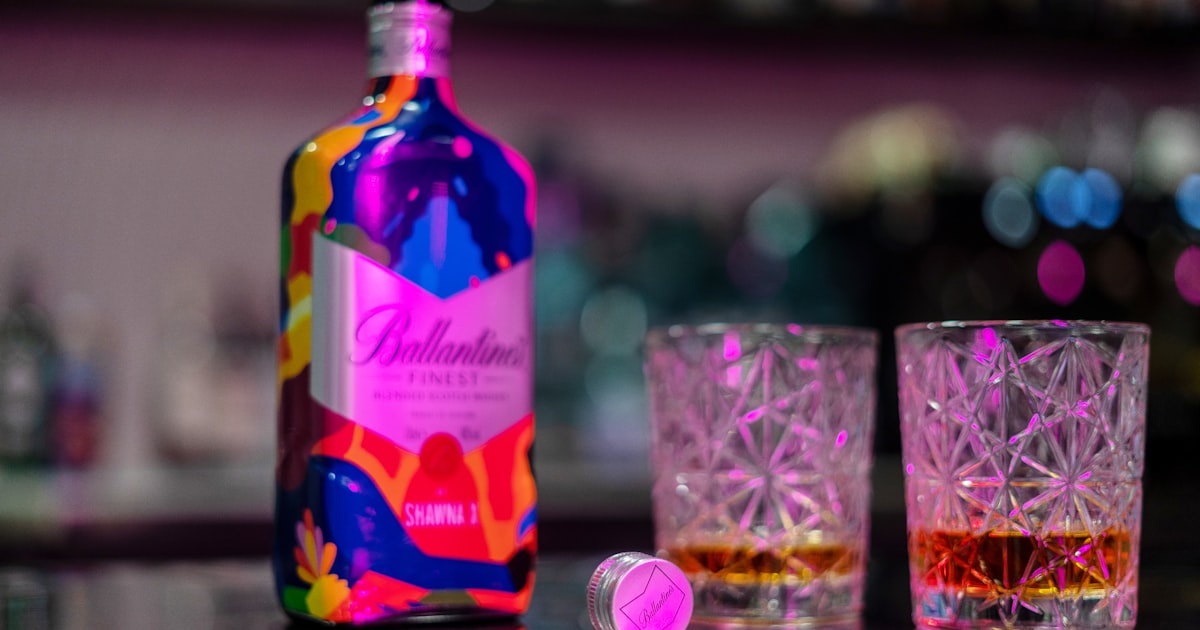
The Most Popular Sleep Aid on Earth
Two glasses of wine. You're out cold in ten minutes. Then at 3:14 AM you're wide awake, warm, heart going a little faster than it should, and you can't get back down.
That's not bad luck. That's the drink.
Alcohol is probably the most-used sleep aid in the world, and it's one of the worst ones you can pick. Not because it doesn't work — it does work, for about three hours. The problem is what it does after that.
This post is educational, not medical advice. If you're drinking to fall asleep most nights, that's a conversation to have with your doctor, and I mean that sincerely rather than as a disclaimer.
Key Facts
- Even low doses hurt REM sleep. A 27-study review found REM disruption starting at roughly two drinks, getting worse with more (Sleep Medicine Reviews, 2025)
- The "falls asleep faster" effect needs a lot of alcohol. Shorter time to fall asleep only showed up at about five drinks or more (same review)
- Breathing gets worse. Across 14 studies, alcohol raised breathing-event counts by about 4 per hour in snorers and about 7 per hour in people with sleep apnea (Sleep Medicine Reviews, 2018)
- Your heart rate stays up. In 40 healthy adults, average overnight resting heart rate rose from about 64 to 67 beats per minute on drinking nights (Nutrients, 2025)
- You make more urine. Alcohol produced higher total urine output than the same volume of water (American Journal of Physiology – Renal Physiology, 2020)
- The usual advice is three hours. Stop drinking at least three hours before bed (Sleep Foundation)
Want a follow-up on this topic? Get a note when Komori launches (2027)
One email when the contactless monitor ships, plus the occasional short follow-up on this topic. No spam, leave any time.
Why It Works at First, and Why That's the Trap
Alcohol boosts the effect of GABA, the brain's main "slow down" signal 1. That's the same general lever a lot of sedatives pull. So yes, it makes you drowsy. That part is real.
But sedation isn't sleep. Sedation is a chemical pushing your brain down. Sleep is your brain running a specific program in a specific order. Alcohol gets you across the starting line and then scrambles the program.
Here's the surprise from the big 2025 review of 27 studies: falling asleep faster only showed up at high doses, around five standard drinks or more. REM sleep, on the other hand, got disrupted starting at about two drinks 2. So the benefit needs a lot of alcohol and the damage starts with a little. That's a bad trade.
The First Half: Deep Sleep Up, REM Down
For the first few hours, alcohol does two things at once.
Deep sleep goes up. You get more slow-wave sleep early in the night than you normally would 3. This is why people swear a nightcap gives them "great sleep." The first stretch actually does feel heavy.
REM sleep goes down. REM is dream sleep, and it's when your brain does a lot of memory and emotional processing. Alcohol delays your first REM period and cuts REM in the first half of the night 3. The 2025 review found the same thing across studies: REM comes later and there's less of it 2.
Normally your night runs in cycles of about 90 to 110 minutes, with deep sleep loaded into the early cycles and REM getting longer as the night goes on 4. Alcohol shoves that whole balance around. If you want the normal version of this, we wrote about what the first 90 minutes of sleep actually do.
The Second Half: The Bill Comes Due
Your liver clears alcohol at a roughly fixed rate. It doesn't speed up because you drank more — the enzyme that does the work is already maxed out 1. So the alcohol drains out on its own schedule, and somewhere in the middle of the night, the sedative goes away.
What's left is a brain that spent three hours being pushed down and now springs back.
In the second half of the night, sleep gets choppy. You get more wakefulness and more of the lightest sleep stage 3. The Sleep Foundation describes the same pattern: more N3 early, then a rise in N1 later, "which can lead to frequent wakings and fragmented, low-quality sleep" 5.
This is the 3 AM wake-up. It's the single most common complaint I hear about alcohol and sleep, and the mechanism is boring and predictable. If you get those wake-ups without drinking too, we covered why you wake up at 3 AM separately.
Hour by Hour
This is the general pattern the research describes for a moderate evening's drinking. It's a sketch, not a measurement of any one person's night. The hour ranges are approximate and exist to show the order things happen in, not to predict your night — where your own lines fall depends on dose, body size, and timing.
| Time after your last drink | What alcohol is doing | What you'd feel |
|---|---|---|
| 0–1 hr | Boosting GABA, the brain's slow-down signal 1 | Drowsy, relaxed, ready for bed |
| 1–3 hr | Deep sleep pushed up, REM pushed down and delayed 3 | Heavy, dreamless-feeling sleep |
| 1–4 hr | Throat muscles relaxed, airway narrower 6 | Louder snoring, more breathing events |
| 2–5 hr | Extra urine production from suppressed anti-diuretic hormone 7 | The first bathroom trip |
| 3–6 hr | Alcohol mostly cleared; the brain rebounds | Wake-ups, vivid dreams, light choppy sleep 3 |
| All night | Heart rate running a few beats per minute above baseline 8 | Warm, restless, "wired but tired" |
| Next day | REM you didn't get isn't coming back | Flat mood, fuzzy focus, low energy |
Your Airway Gets Floppy
This is the part people underestimate.
Alcohol relaxes muscle, including the muscles that hold your throat open while you sleep. A narrower airway means more vibration, which is louder snoring, and more partial or full blockages.
Two separate meta-analyses found the same thing. One pooled 14 studies with 422 people and found the apnea-hypopnea index — the standard count of breathing interruptions per hour — went up after drinking, with bigger jumps in people who already snored (about +4 per hour) or already had sleep apnea (about +7 per hour). Average blood oxygen went down 6. A second pooled 13 studies with 279 patients and found an average increase of about 4 events per hour, plus a drop of about 2.7 percentage points in the lowest oxygen level of the night 9.
If you snore, alcohol makes it worse. If you have sleep apnea, alcohol makes it worse. That's about as clean as sleep research gets. Position matters here too, which we get into in snoring and sleep position.
The Bathroom Problem
Alcohol suppresses vasopressin, the hormone that tells your kidneys to hold onto water. Less vasopressin, more urine.
A controlled study compared drinking alcohol against drinking the same volume of water and found higher total urine output with alcohol, along with a longer-lasting suppression of the hormone 7. So it isn't only that you drank a lot of liquid. The alcohol itself changes the plumbing.
Practical version: the drink you had at 9 PM is why you're up at 2 AM. And once you're awake and standing in a bright bathroom, getting back to sleep is a whole separate project.
Your Heart Doesn't Get the Night Off
A 2025 study tracked 40 healthy adults through three consecutive drinking evenings. Average overnight resting heart rate went from 63.6 beats per minute at baseline to 66.6 during the drinking nights — about 3 beats per minute higher, and a statistically solid difference 8. It came back down quickly after they stopped.
Three beats per minute doesn't sound like much. But it's a decent signal that your body is doing work all night instead of resting. It also explains the specific feeling of alcohol sleep: warm, slightly restless, never quite settled.
So How Long Before Bed Should You Stop?
The honest answer is that nobody has run the study that gives you a clean number for your body.
What we can say: alcohol leaves the blood at a roughly steady rate, commonly cited at around 15 mg per 100 mL of blood per hour, with real variation between people 10. That's roughly one standard drink an hour, but "roughly" is doing real work in that sentence — body size, sex, food, and genetics all move it.
The common guidance is at least three hours between your last drink and bed 5. If you had one drink with dinner at 7 PM and go to bed at 11, you're probably fine. If you had four drinks ending at 10:30, you are going to sleep with a meaningful amount of alcohol still on board, and the second half of your night is going to reflect that.
I'm not going to tell you not to drink. I'll tell you that the last drink is the expensive one, and moving it earlier costs you nothing. Same logic applies to caffeine timing — the cutoff rules are different, but the principle is the same: your body needs time to clear it.
Where Komori Fits
Komori is a contactless wellness device we're building — no camera, no wearable, nothing to strap on. It is not a medical device and it does not diagnose anything.
What it's designed to track is sleep position, movement and restlessness, bed-exit events, and the room around you: temperature, humidity, CO2, light, and noise. It is not designed to measure breathing, heart rate, or blood oxygen.
Where that could be useful for this topic: alcohol nights tend to look different in the things Komori is being built to see. More position changes. More restlessness in the back half of the night. More trips out of bed. Once it ships, someone curious about their own drinking could compare a Tuesday against a Saturday over a few weeks and see whether the pattern holds for them, rather than trusting a hazy memory of how they slept.
That's a personal-curiosity tool, not a diagnosis. We've written about why we refuse to squash a night into a single score if you want the reasoning.
Alcohol and sleep is one of the few areas where the research is unusually consistent and the fix is unusually simple: drink earlier, or drink less, and see what your nights do. If you snore heavily, wake gasping, or feel wrecked no matter how early you stop, that's worth bringing to your doctor rather than solving alone.
Footnotes
-
Mathew F, Goyal A. "Ethanol." StatPearls Publishing. Describes zero-order kinetics and enhancement of GABA inhibition. ↩ ↩2 ↩3
-
Gardiner C, et al. "The effect of alcohol on subsequent sleep in healthy adults: A systematic review and meta-analysis." Sleep Medicine Reviews, 2025. 27 studies. ↩ ↩2
-
Colrain IM, Nicholas CL, Baker FC. "Alcohol and the Sleeping Brain." Handbook of Clinical Neurology, 2014. ↩ ↩2 ↩3 ↩4 ↩5
-
Patel AK, et al. "Physiology, Sleep Stages." StatPearls Publishing. ↩
-
Sleep Foundation. "Alcohol and Sleep." ↩ ↩2
-
Kolla BP, et al. "The impact of alcohol on breathing parameters during sleep: A systematic review and meta-analysis." Sleep Medicine Reviews, 2018. 14 studies, 422 participants. ↩ ↩2
-
Sailer CO, et al. "Effects of alcohol consumption on copeptin levels and sodium-water homeostasis." American Journal of Physiology – Renal Physiology, 2020. ↩ ↩2
-
Strüven A, et al. "The Impact of Alcohol on Sleep Physiology: A Prospective Observational Study on Nocturnal Resting Heart Rate Using Smartwatch Technology." Nutrients, 2025. 40 participants. ↩ ↩2
-
Burgos-Sanchez C, et al. "Impact of Alcohol Consumption on Snoring and Sleep Apnea: A Systematic Review and Meta-analysis." Otolaryngology–Head and Neck Surgery, 2020. 13 studies, 279 patients. ↩
-
Mackus M, et al. "The Association between Ethanol Elimination Rate and Hangover Severity." International Journal of Environmental Research and Public Health, 2020. Small study (n=8); cites Jones' reported average of 15 mg/100 mL/h with a range of 10 to 35. ↩
Want a follow-up on this topic? Get a note when Komori launches (2027)
One email when the contactless monitor ships, plus the occasional short follow-up on this topic. No spam, leave any time.
Keep reading
Want to see your sleep position data?
Join the free waitlist for launch updates. Or lock in founder pricing with the Insider Pass ($49, credited toward your purchase).