Melatonin: What the Evidence Says About Dose and Timing
Dovy Paukstys
Founder, Komori Care
The Bottle on Your Nightstand Is Probably Wrong
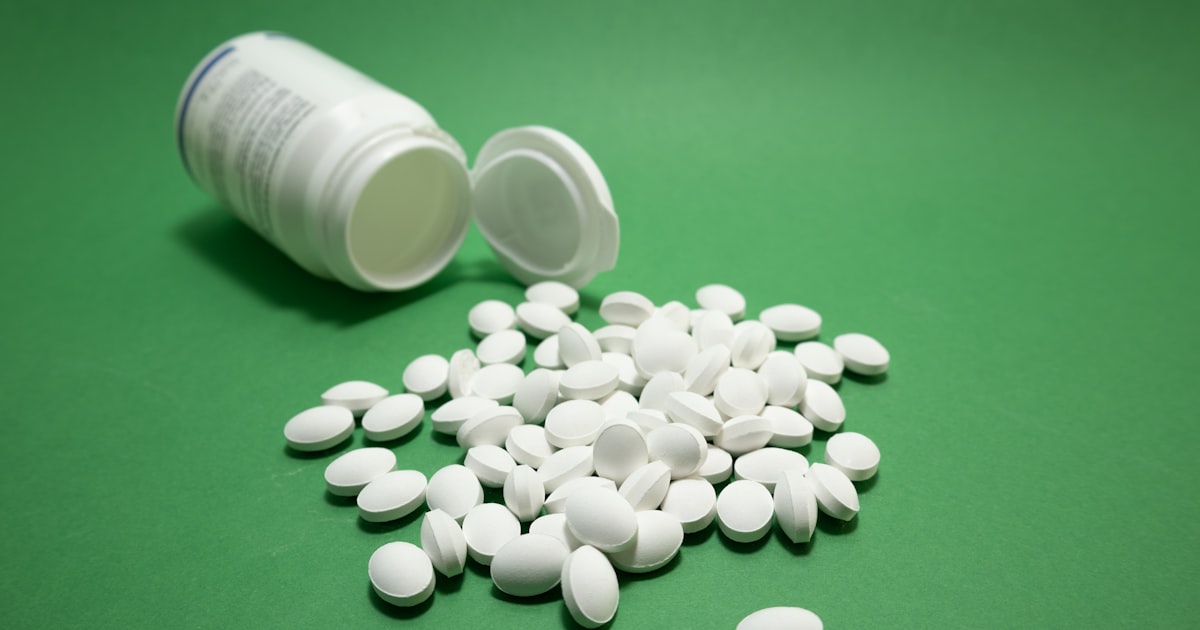
Here's the routine. You can't sleep, so you take a melatonin at 10:30 PM, right as you're getting into bed. The bottle says 10 mg. It didn't do much last time, so maybe tonight you take two.
Almost every part of that is backwards.
Melatonin isn't a sleeping pill. It's a timing signal — a chemical message your brain normally releases in the evening that tells the rest of your body that biological night has started. Taking a big dose at bedtime is a bit like shouting the time at someone who already knows what time it is.
The research on melatonin is real, and it's much less impressive than the marketing. It's also more useful than the marketing, if you use it for the thing it's actually good at. This post is educational, not medical advice. If you're taking melatonin regularly, or thinking about giving it to a child, that's a conversation to have with your doctor.
Key Facts
- Across 19 trials and 1,683 people, melatonin cut time-to-fall-asleep by about 7 minutes (Ferracioli-Oda et al., 2013)
- The American Academy of Sleep Medicine suggests clinicians NOT use melatonin for chronic insomnia — a weak recommendation against (AASM guideline, 2017)
- A 0.3 mg dose restored sleep efficiency in older adults; the 3.0 mg dose left melatonin elevated into daylight hours (Zhdanova et al., 2001)
- The same AASM does endorse strategically timed melatonin for delayed sleep-wake phase disorder (AASM guideline, 2015)
- Tested supplements ranged from 83% below to 478% above their labeled melatonin content (Erland & Saxena, 2017)
- 22 of 25 melatonin gummy products were inaccurately labeled; actual content ran 74% to 347% of the label (Cohen et al., JAMA 2023)
Want a follow-up on this topic? Get a note when Komori launches (2027)
One email when the contactless monitor ships, plus the occasional short follow-up on this topic. No spam, leave any time.
A Signal, Not a Sedative
Your brain releases melatonin from a small gland when it gets dark, and stops when it gets light. The release ramps up a couple of hours before your usual bedtime. Sleep researchers call that ramp-up point dim light melatonin onset, or DLMO — basically, the moment your body officially declares evening.
Melatonin doesn't knock you out, and the trial results below show it barely tries. What it does is tell your internal clock where "night" is, and if you take it at the right moment relative to your own rhythm, it can move that clock.
This one fact explains almost everything confusing about melatonin. It explains why a huge dose doesn't work better than a small one. It explains why it helps a lot with jet lag and only a little with ordinary insomnia. And it explains why the timing question is the important one.
What the Meta-Analyses Actually Found
Let's put a number on "helps a little."
A 2013 meta-analysis pooled 19 randomized trials covering 1,683 people and found that melatonin reduced sleep latency — the time it takes to fall asleep — by 7.06 minutes. Total sleep time went up by 8.25 minutes. Sleep quality improved by a small amount, a standardized effect size of 0.22 1.
Seven minutes. That's the headline result from the friendliest analysis of the evidence, and the authors themselves noted the effects were modest compared with prescription sleep medications.
The sleep medicine field's official read is blunter. The American Academy of Sleep Medicine's 2017 clinical guideline on drugs for chronic insomnia went through the trial evidence and landed on: "We suggest that clinicians not use melatonin as a treatment for sleep onset or sleep maintenance insomnia (versus no treatment) in adults." It's a WEAK recommendation, which means low certainty, not "proven useless" 2.
If you're taking melatonin because you have chronic insomnia, the evidence does not support that. That's not my opinion, it's the guideline.
If falling asleep is the specific problem, how long it should take to fall asleep is a useful piece of context before you reach for anything.
The Dose Problem
Walk into any pharmacy. The bottles are 5 mg and 10 mg. Gummies too.
Your body makes a tiny fraction of that. The classic dose-finding work compared 0.1 mg, 0.3 mg, and 3.0 mg in 30 older adults, half of whom had reduced sleep efficiency. The 0.3 mg dose — the one that restores normal nighttime blood levels — restored sleep efficiency. The 3.0 mg dose also improved sleep, but it caused a drop in body temperature and left melatonin circulating into the daylight hours 3.
That last part is the problem with big doses. Melatonin's job is to mark night. If it's still elevated at 10 AM, you have effectively smeared "night" across your morning. That's how people end up groggy and blaming the supplement for "not working."
The typical 10 mg gummy is roughly thirty times the dose that had the cleanest effect in that study. Not thirty percent more. Thirty times.
Timing Beats Dose
Here's where melatonin actually earns its keep.
The AASM's 2015 guideline on circadian rhythm sleep-wake disorders — the conditions where your clock is set to the wrong time rather than broken — endorses strategically timed melatonin for delayed sleep-wake phase disorder, the pattern where you can't fall asleep until 3 AM and can't wake before noon 4. Same organization, opposite conclusion from the insomnia guideline, because it's a different problem.
The word doing the work is strategically timed. In one of the studies the guideline reviewed, participants took either 0.3 or 3.0 mg between 3 PM and 9:30 PM, which was 1.5 to 6.5 hours before their own melatonin onset. The authors found that the earlier the dose came relative to that onset, the bigger the clock shift — regardless of which dose was used 4.
Read that again. Timing predicted the effect. Dose didn't.
So: melatonin taken hours before bed, in a small dose, to move your clock earlier is a legitimate, guideline-supported use. Melatonin swallowed at bedtime as a sedative is the version with almost no support. Most people are doing the second thing.
The same logic applies to using melatonin for jet lag, where the entire point is shifting a clock to a new time zone.
| What you're trying to do | What the evidence supports | Typical approach |
|---|---|---|
| Fall asleep faster tonight | Weak — about 7 minutes on average 1 | Not what it's built for |
| Treat chronic insomnia | Guideline suggests against it 2 | Ask about CBT-I instead |
| Shift a too-late sleep schedule earlier | Endorsed for delayed sleep-wake phase disorder 4 | Small dose, hours before target bedtime, with a clinician |
| Adjust to a new time zone | Same clock-shifting mechanism 4 | Timing is the variable, not dose |
| Take more because it stopped working | Nothing supports this | Higher doses lingered into daytime 3 |
You Don't Actually Know What's in the Bottle
This is the part that should bother you most, and it's the part that gets the least attention.
In the United States, melatonin is sold as a dietary supplement. That means it isn't reviewed for potency or purity before it reaches the shelf the way a drug is.
Researchers bought 31 melatonin supplements from 16 brands and measured what was in them. The actual melatonin content ranged from 83% below to 478% above the labeled amount. More than 71% of the products missed their own label by more than 10%. Batch-to-batch variation within a single product ran as high as 466%. And serotonin, a controlled substance, turned up in 8 of the 30 samples tested 5.
A 2023 analysis in JAMA looked specifically at gummies, which is what most people are actually buying. Of 25 products, 22 were inaccurately labeled. Actual melatonin ran from 74% to 347% of what the label claimed. One product contained no detectable melatonin at all, but did contain 31.3 mg of CBD 6.
So when someone says "5 mg doesn't work for me, I take 10," they may in reality be taking anywhere from 4 mg to 35 mg, and it may be a different number next month from the same bottle. You cannot dose carefully with a product that doesn't know its own dose.
If you're going to use it, look for a product with third-party testing. It doesn't guarantee anything, but it beats nothing.
About Children
This one deserves plain speech.
Melatonin does have a place in pediatric sleep medicine. The AASM's 2015 guideline reviewed trials in children aged 6 to 12 with delayed sleep-wake phase disorder, using weight-based doses given 1.5 to 2 hours before habitual bedtime, and found meaningful improvements in how long it took them to fall asleep 4. That's real, and it's done with a clinician involved.
What's happened outside of clinics is a different story. US poison centers logged 260,435 pediatric melatonin ingestions between 2012 and 2021, a 530% increase over that decade. 83.8% involved children five and under, almost all of them unsupervised. Over the period, 4,097 children were hospitalized, 287 required intensive care, and two deaths were reported 7.
Gummies taste like candy and are stored like candy. That's the mechanism.
Talk to your pediatrician before giving a child melatonin, and store it the way you'd store medication. Not on the counter.
What I'd Actually Tell You
Melatonin is a decent clock-shifting tool and a poor sleeping pill, and it's sold as the opposite of both.
If your problem is that your schedule is shifted late, or you just flew across an ocean, a small dose taken well before bed is reasonable and has guideline support behind it. If your problem is that you lie awake at 2 AM with your brain running, melatonin is not the answer, and CBT-I probably is. We wrote about why 3 AM wake-ups happen, and the causes there don't respond to a timing hormone.
And whatever you take, know that the number on the label is a suggestion.
Where Komori Fits
Komori is a wellness device. It is not designed to detect, diagnose, treat, or monitor any medical condition, and it has nothing to say about medications or supplements.
What it's being built to capture, contactlessly and without a camera or a wearable, is context: sleep position, movement and restlessness, bed-exit events, and room conditions like temperature, humidity, light, and sound, across many nights rather than one.
Why mention it here at all? Because "did that help?" is very hard to answer from memory, and memory is what most people use. One good night after starting something new proves nothing. Once it ships, someone might compare six weeks of restlessness and bed-exit patterns before and after a change instead of relying on a vague sense that things feel better. That's context for a conversation with a doctor. It isn't a verdict, and it isn't a diagnosis.
The Last Word
Melatonin is a timing signal. Use it for timing, in small amounts, and don't expect it to sedate you.
If sleep has been bad for weeks or months, the supplement aisle is the wrong aisle. Bring it to your doctor — chronic insomnia has treatments with far better evidence than anything on that shelf.
Footnotes
-
Ferracioli-Oda E, Qawasmi A, Bloch MH. "Meta-analysis: melatonin for the treatment of primary sleep disorders." PLoS ONE, 2013. ↩ ↩2
-
Sateia MJ, Buysse DJ, Krystal AD, Neubauer DN, Heald JL. "Clinical Practice Guideline for the Pharmacologic Treatment of Chronic Insomnia in Adults." Journal of Clinical Sleep Medicine, 2017. ↩ ↩2
-
Zhdanova IV, Wurtman RJ, Regan MM, Taylor JA, Shi JP, Leclair OU. "Melatonin Treatment for Age-Related Insomnia." The Journal of Clinical Endocrinology & Metabolism, 2001. ↩ ↩2
-
Auger RR, Burgess HJ, Emens JS, Deriy LV, Thomas SM, Sharkey KM. "Clinical Practice Guideline for the Treatment of Intrinsic Circadian Rhythm Sleep-Wake Disorders." Journal of Clinical Sleep Medicine, 2015. ↩ ↩2 ↩3 ↩4 ↩5
-
Erland LAE, Saxena PK. "Melatonin Natural Health Products and Supplements: Presence of Serotonin and Significant Variability of Melatonin Content." Journal of Clinical Sleep Medicine, 2017. ↩
-
Cohen PA, Avula B, Wang YH, Katragunta K, Khan I. "Quantity of Melatonin and CBD in Melatonin Gummies Sold in the US." JAMA, 2023. ↩
-
Lelak K, Vohra V, Neuman MI, Toce MS, Sethuraman U. "Pediatric Melatonin Ingestions — United States, 2012–2021." MMWR Morbidity and Mortality Weekly Report, 2022. ↩
Want a follow-up on this topic? Get a note when Komori launches (2027)
One email when the contactless monitor ships, plus the occasional short follow-up on this topic. No spam, leave any time.
Keep reading
Want to see your sleep position data?
Join the free waitlist for launch updates. Or lock in founder pricing with the Insider Pass ($49, credited toward your purchase).