Komori at NIH's Curing the Epilepsies 2026
Dovy Paukstys
Founder, Komori Care
Important: Komori does not detect seizures, and Komori is not for epilepsy patients. The consumer product is a contactless wellness monitor — it is not a medical device, is not FDA-cleared, and is not intended to diagnose, treat, cure, or prevent any condition. Any epilepsy- and SUDEP-related work referenced here is investigational research conducted separately with clinical and research partners under appropriate protocols — that research is gated and is not commercially available. Households living with epilepsy should consult a neurologist and rely on clinically validated seizure-detection devices.
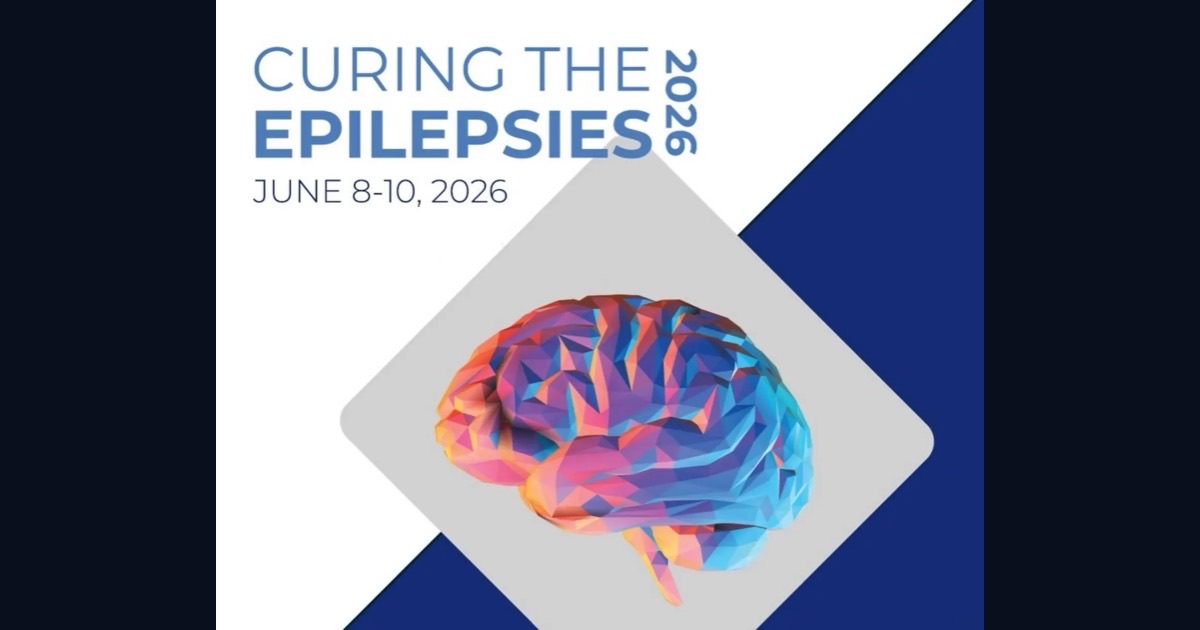
This week I'm at the NIH Curing the Epilepsies 2026 conference at the Natcher Conference Center in Bethesda, Maryland (June 8–10). If we met at the poster session and you're reading this — welcome. This is the longer version of the conversation we started.
If you didn't, here's the short version of why a contactless-sleep-monitoring founder is standing in a room full of epileptologists and neuroscientists.
What I'm presenting
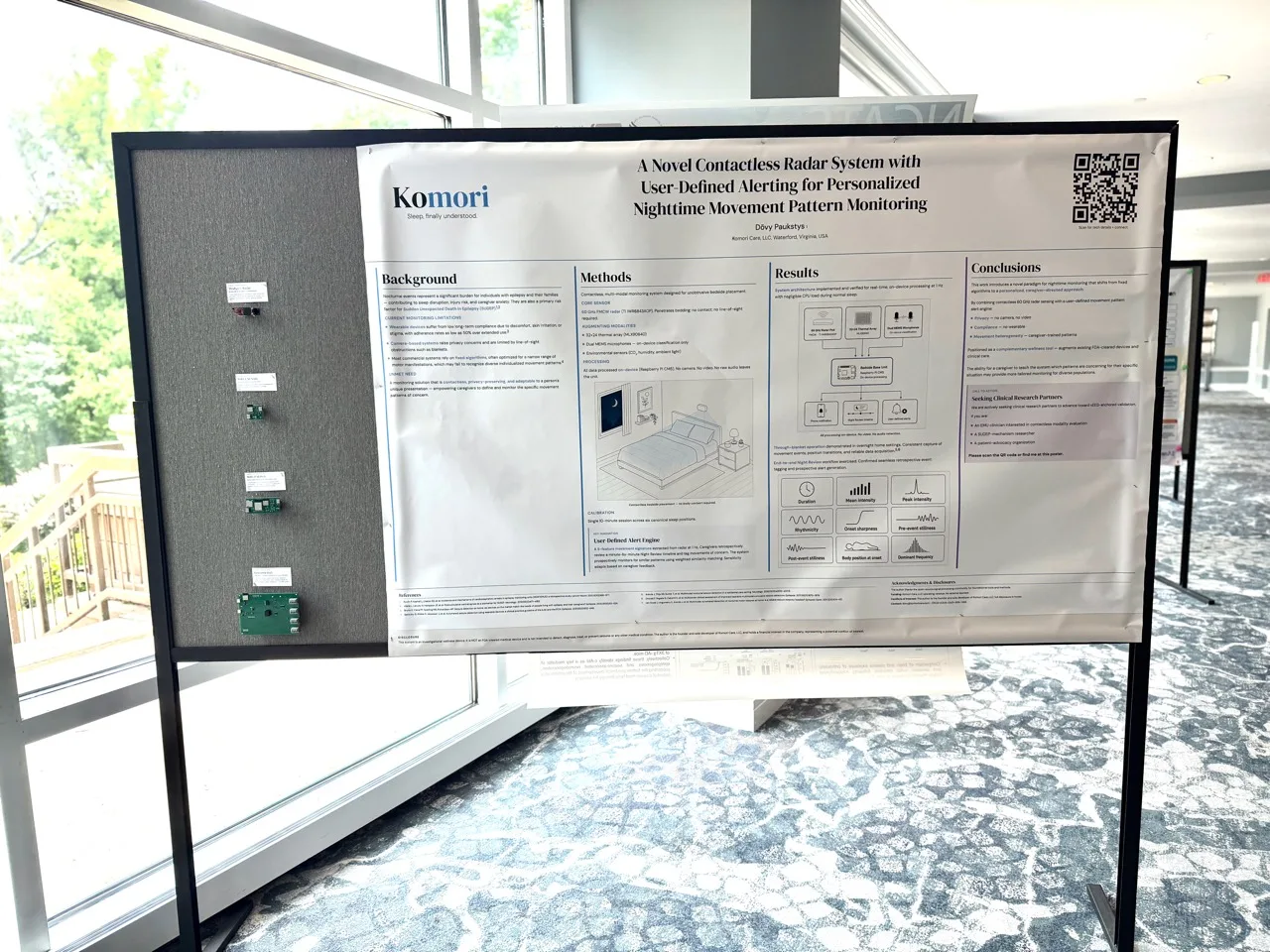
The poster is a research presentation of a contactless, multimodal nighttime-monitoring platform — 60 GHz radar that senses through bedding, paired with thermal, acoustic, and ambient sensing, all processed on-device. No camera. No video. No raw audio leaving the device. The point of the architecture is that privacy is a structural property, not a policy promise.
The piece that gets the most questions is the user-defined alert engine: instead of a fixed, one-size-fits-all algorithm, a caregiver can review the night, mark the movement patterns that matter to their situation, and have the system watch for similar patterns going forward. It's a different philosophy than "the device decides what's important." The person who knows the patient decides.
To be clear about scope: this is research into contactless nighttime monitoring and body-position sensing. It is not a seizure-detection product, and nothing about it is for sale to epilepsy households. The investigational direction lives entirely inside the research collaboration.
Want a follow-up on this topic? Get a note when Komori launches (2027)
One email when the contactless monitor ships, plus the occasional short follow-up on this topic. No spam, leave any time.
Why the night, and why this room
Sudden Unexpected Death in Epilepsy is the most feared outcome in epilepsy care, and the events most associated with it happen at night — unwitnessed, during sleep. That's also where families have the least visibility and the fewest tools that don't require strapping something to a body or pointing a camera at a bed.
That gap is exactly why this conference matters, and why I wanted to be in the room rather than reading the abstracts later. The science here is years ahead of the consumer conversation, and the people doing it are the right people to pressure-test whether a contactless approach can earn a place in serious research.
The work behind the poster
A few things I'm happy to talk through in more depth with anyone who's interested:
- The clinical research collaboration. A multi-PI structure with clinical and academic partners, with a protocol amendment in motion to add Komori's contactless modalities to an existing study.
- An NIH STTR Phase I application in preparation, focused on contactless-modality reliability and the multi-modal sensor architecture, with vEEG-anchored validation in the EMU as the forward path.
- A multi-AI rule-discovery methodology built across dozens of public physiological datasets, with manuscripts in preparation for IEEE venues.
None of that is a finished result. It's a direction, and an honest one — the whole reason I'm here is to find the people who can help validate it properly.
Find me
If you're an EMU clinician, a SUDEP-mechanism researcher, an NINDS program officer, a sleep-medicine researcher, or a foundation working in this space — I'd genuinely like to talk. I'm especially interested in epilepsy monitoring units with vEEG and sleep-staging capability who'd consider evaluating contactless modalities under an existing or new IRB protocol.
- The full conference context is here: komoricare.com/conferences/curing-epilepsies-2026
- Or email me directly: hello@komoricare.com
I built Komori to guard the small. The only way to find out whether it can is to put it in front of the people who already spend their careers doing exactly that. If that's you — let's connect.
— Dōvy Paukstys, Founder, Komori Care
Keep reading
- The Komori epilepsy pipeline — what the research program looks like in practice.
Educational explainers now live in the epilepsy guide.
Want a follow-up on this topic? Get a note when Komori launches (2027)
One email when the contactless monitor ships, plus the occasional short follow-up on this topic. No spam, leave any time.
Keep reading
Want to see your sleep position data?
Join the free waitlist for launch updates. Or lock in founder pricing with the Insider Pass ($49, credited toward your purchase).