Sleep Position During Pregnancy: What the Research Actually Says
Dovy Paukstys
Founder, Komori Care
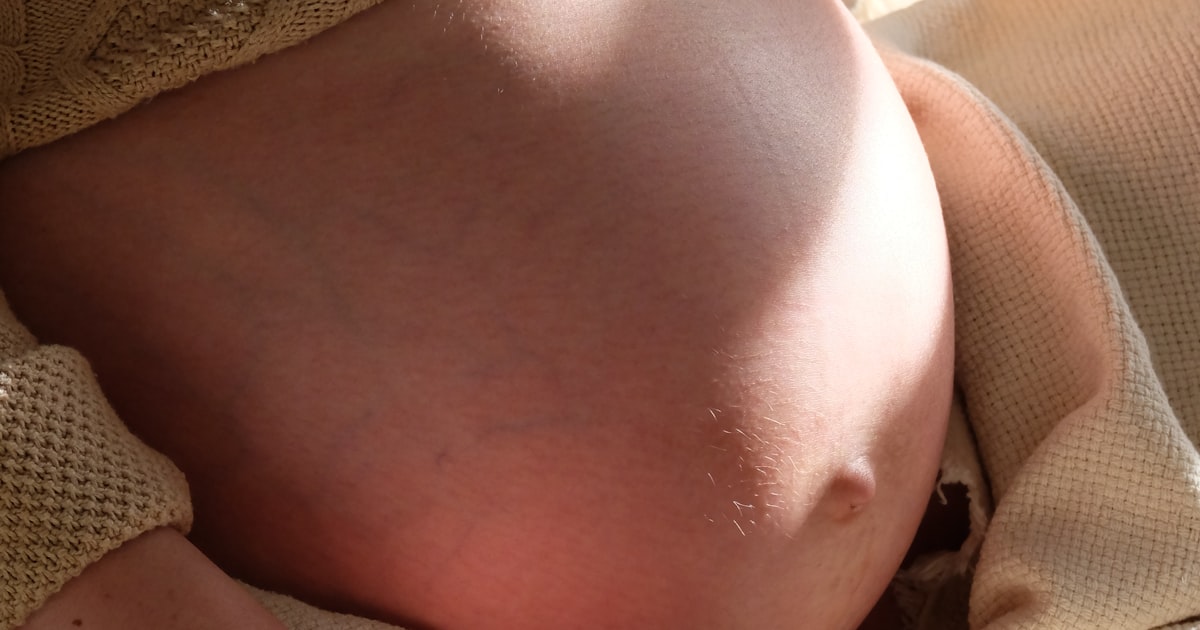
Important: Komori is not cleared for use during pregnancy and is not intended to be used for maternal or fetal monitoring. Pregnant women considering sleep-position monitoring should consult their obstetric provider and use clinically validated tools. The educational content below is for general awareness only.
The Advice That Keeps Pregnant Women Up at Night
If you're pregnant — especially in your third trimester — you've probably been told to sleep on your left side. Maybe your OB mentioned it. Maybe it was in a pregnancy book. Maybe it was the first of 400 anxiety-inducing things the internet told you.
The advice is usually presented as absolute. Sleep on your left side. Don't sleep on your back. Something terrible might happen if you do.
Here's what the research actually says. It's more nuanced than the headlines suggest, and understanding the real data might actually help you sleep better.
Where the Advice Comes From
The "sleep on your left side" recommendation traces back to basic physiology. In late pregnancy, the uterus is heavy enough to compress the inferior vena cava — the large vein that returns blood from your lower body to your heart — when you lie on your back. This compression can reduce cardiac output and, theoretically, reduce blood flow to the placenta.
On your left side, the vena cava (which runs slightly to the right of your spine) is uncompressed. Blood flows freely. Placental perfusion is maximized.
The physiology is sound. The question is whether this translates to meaningful risk during sleep.
What the Studies Found
Several large studies have examined the relationship between sleep position and adverse pregnancy outcomes.
The MiNESS Study (2017)
The Midlands and North of England Stillbirth Study was a case-control study of over 1,000 women, published in the British Journal of Obstetrics and Gynaecology. It found that women who reported going to sleep on their back had a 2.3-fold increased risk of late stillbirth (after 28 weeks) compared to women who went to sleep on their left side.
Important context: this was the position at sleep onset, not the position maintained throughout the night. The study couldn't determine how long women actually spent on their backs.
The CRIBSS Study (New Zealand, 2017)
This study, published in The Lancet, found similar results — going to sleep in a supine (back) position was associated with a 3.7-fold increased risk of late stillbirth. Again, this was the going-to-sleep position, self-reported after the outcome occurred.
The STARS Study (2019)
The Sleep for Two Randomized Controlled Trial is where things get more interesting. This US study actually tracked women's sleep positions using sensors. In the STARS pregnancy-sleep research, women spent a meaningful portion of the night on their backs regardless of starting position. Position at sleep onset didn't reliably predict position throughout the night.
The SLEEP Study (2019)
This was a prospective cohort study of over 8,700 women that found no significant association between self-reported sleep position and adverse outcomes including stillbirth, small-for-gestational-age babies, or gestational hypertensive disorders.
Putting the Risk in Context
Here's what gets lost in the scary headlines.
Late stillbirth (after 28 weeks) affects approximately 2.8 per 1,000 pregnancies in the US. Even if back sleeping doubles the risk, the absolute risk goes from roughly 3 in 1,000 to 6 in 1,000. That means 994 out of 1,000 women who sleep on their backs will have perfectly normal outcomes.
The relative risk sounds alarming. The absolute risk is small. This distinction matters enormously because of what happens next.
The Anxiety Problem
Here's the unintended consequence of oversimplified advice: pregnant women are losing sleep worrying about their sleep position.
A 2020 survey published in BMC Pregnancy and Childbirth found that over 60% of pregnant women reported anxiety about their sleep position. Many reported waking multiple times per night to check and correct their position. Some reported being unable to fall asleep at all due to positional anxiety.
This is a real problem. Sleep deprivation during pregnancy is associated with:
- Longer labor and higher cesarean rates — a 2004 UCSF study found that women sleeping less than 6 hours had significantly longer labors
- Gestational diabetes risk — poor sleep quality in pregnancy is independently associated with glucose intolerance
- Preeclampsia — multiple studies link sleep deprivation to hypertensive disorders
- Postpartum depression — prenatal sleep quality is one of the strongest predictors
In other words, the anxiety about sleep position may be causing more harm than the sleep position itself. A pregnant woman who sleeps 5 fragmented hours on her left side is almost certainly worse off than one who sleeps 7 solid hours and occasionally rolls onto her back.
What Your Body Actually Does at Night
Here's something reassuring that the studies confirmed: your body is not passive during sleep.
When pregnant women in monitored studies did experience vena cava compression on their backs, most unconsciously shifted position within minutes. The body detects the reduced blood flow and triggers a position change — the same way you shift when your arm falls asleep.
In the STARS pregnancy-sleep research, women transitioned between positions many times per night, even in late pregnancy. Spending some time on your back during these transitions is normal and, for most women, self-correcting.
You're not going to fall asleep on your side and remain perfectly still for eight hours. Nobody does. And you don't need to.
Join the waitlist and get the guide
Four pages, free: all four positions side by side across reflux, snoring, back, shoulder, neck and pregnancy — plus how strong the evidence behind each row actually is, and the pillow setup for each.
Every one of those studies measured the position people said they went to sleep in. Not what they held.
Keep reading

Want to see your sleep position data?
Get the Insider Pass and be first to experience Komori when it ships.